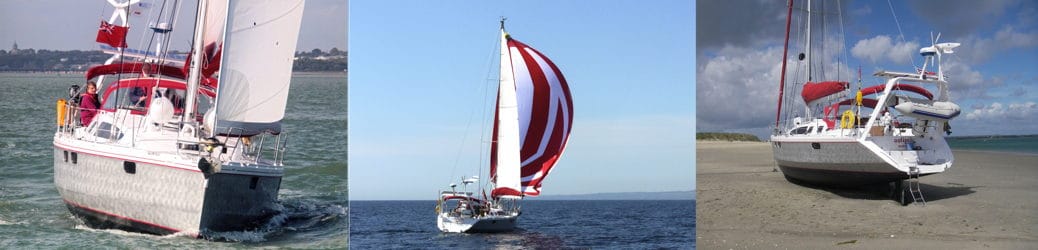
We had a good sail along the IJ/North Sea Canal to IJmouden, where we locked though into the North Sea and immediately berthed in the IJmouden marina. There we were visited by Ynskje’s other nephew Aram and Jolanda.
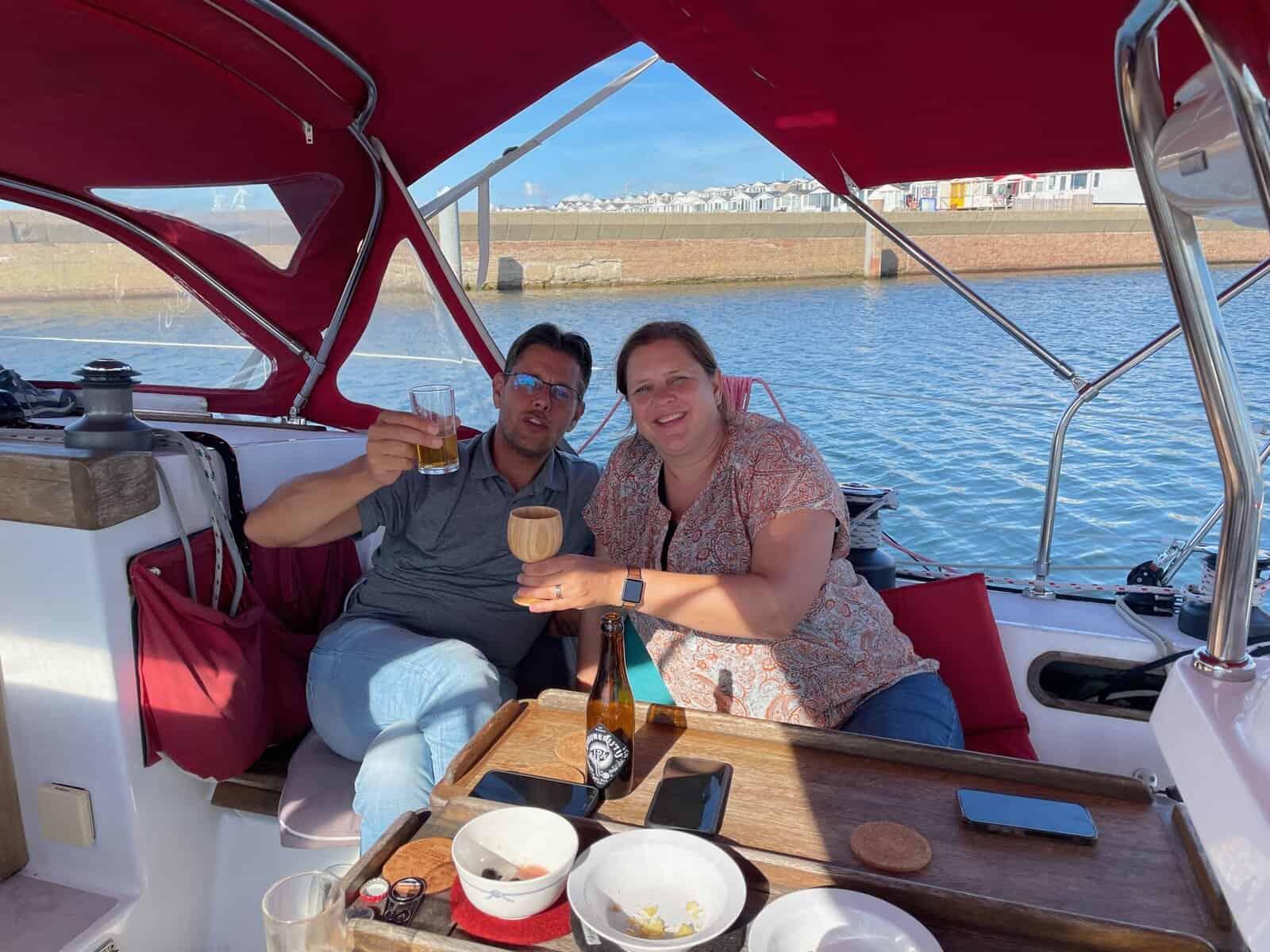
Scheveningen
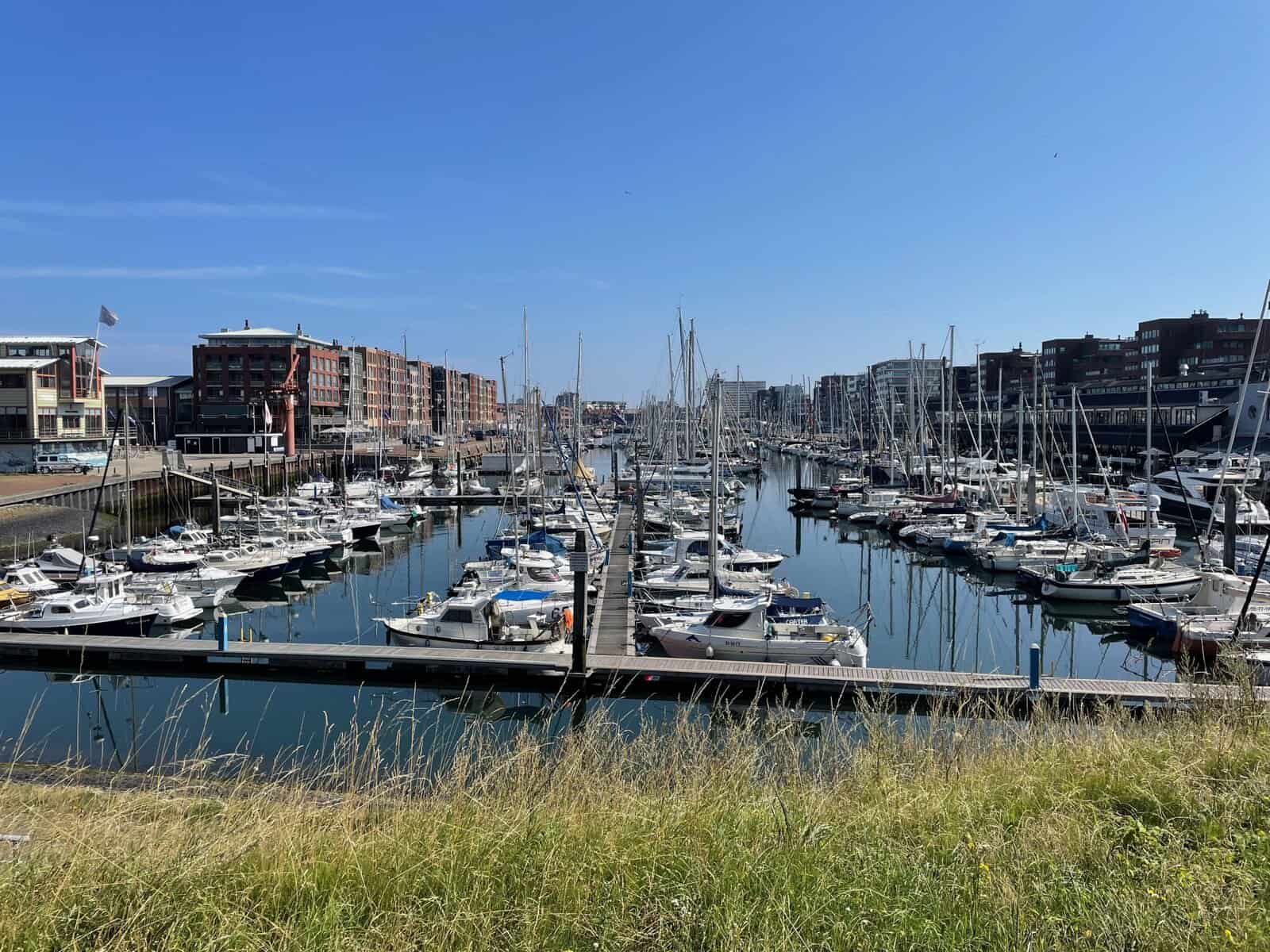
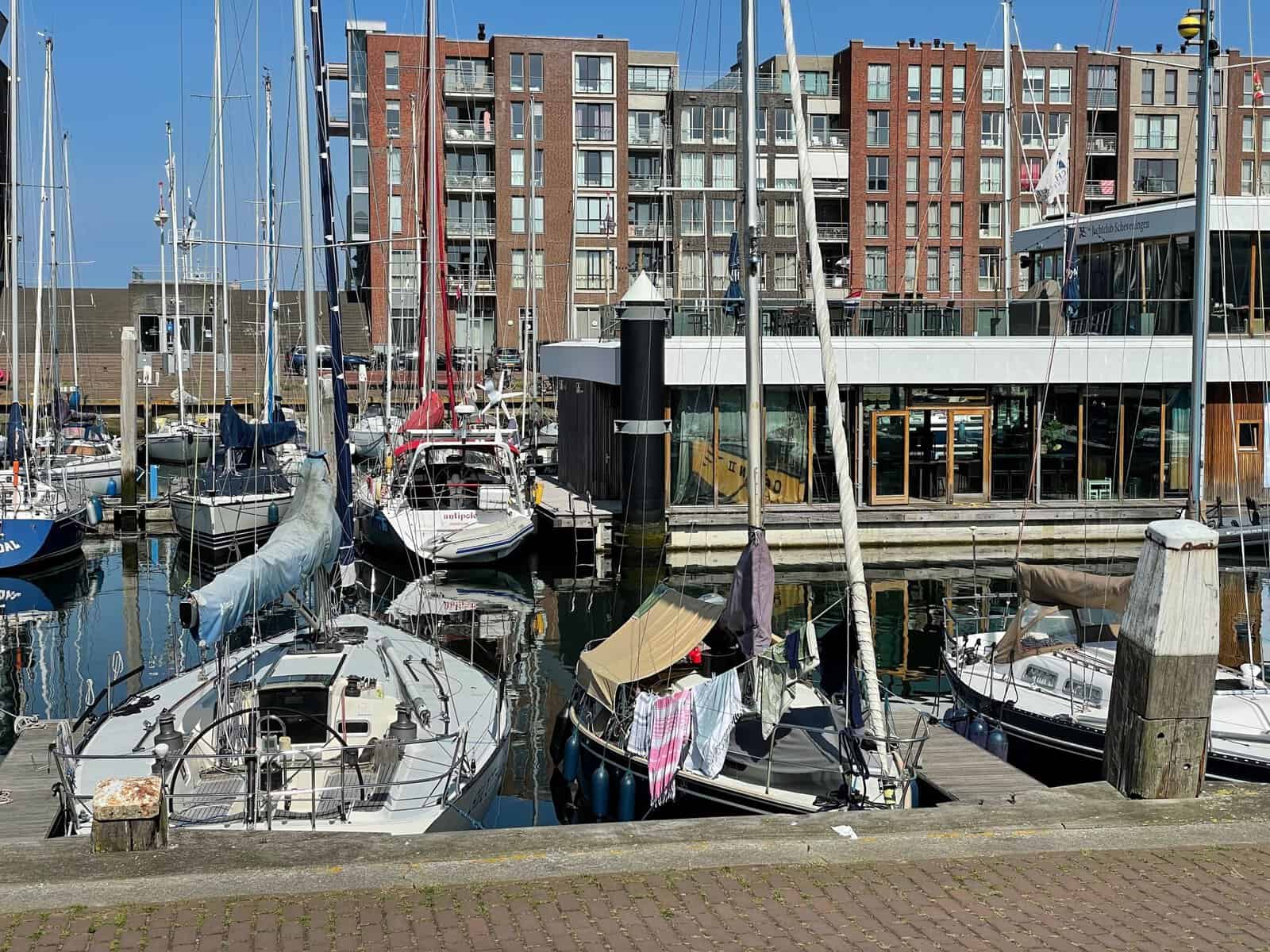
From IJmouden we had a good sail 26nm to Scheveningen. Scheveningen is the port for the Netherlands capital Den Haag, which no longer has any sea access. The marina is through the commercial docks and in a narrow dock now lined with restaurants and bars. The Scheveningen Yacht Club has done an excellent job maximising berth spaces but, in season, it gets very crowded and packing in rafts is common. We were lucky to be given a berth alongside the floating yacht club – a splendid facility.
Our berth was right opposite Oma Toos‘ pancake house, where we enjoyed coffee/tea, appelgebak met slagroom and, of course, pancakes. We enjoyed two nights in Scheveningen and would have stayed longer, if it were not for a favourable wind window for the next passage.
The passage from Scheveningen took us across the mouth of the River Maas – the entrance to Rotterdam – with its many huge ship movements. The wind had faded and we motored across to avoid loitering in their way.
The Oosterschelde
After 45nm we locked through the Roompotsluis into the Oosterschelde. The Oostercheldekering is a huge storm surge barrier protecting the Oosterschelde. Unlike the IJsselmeer, the barrier is kept open as much as possible and there are strong streams through it. So the Oosterschelde is still tidal and healthy.
When we past inland through the Oosterschelde in June 2012, we visited the picturesque port of Zierikzee. However, it will be very packed in August.
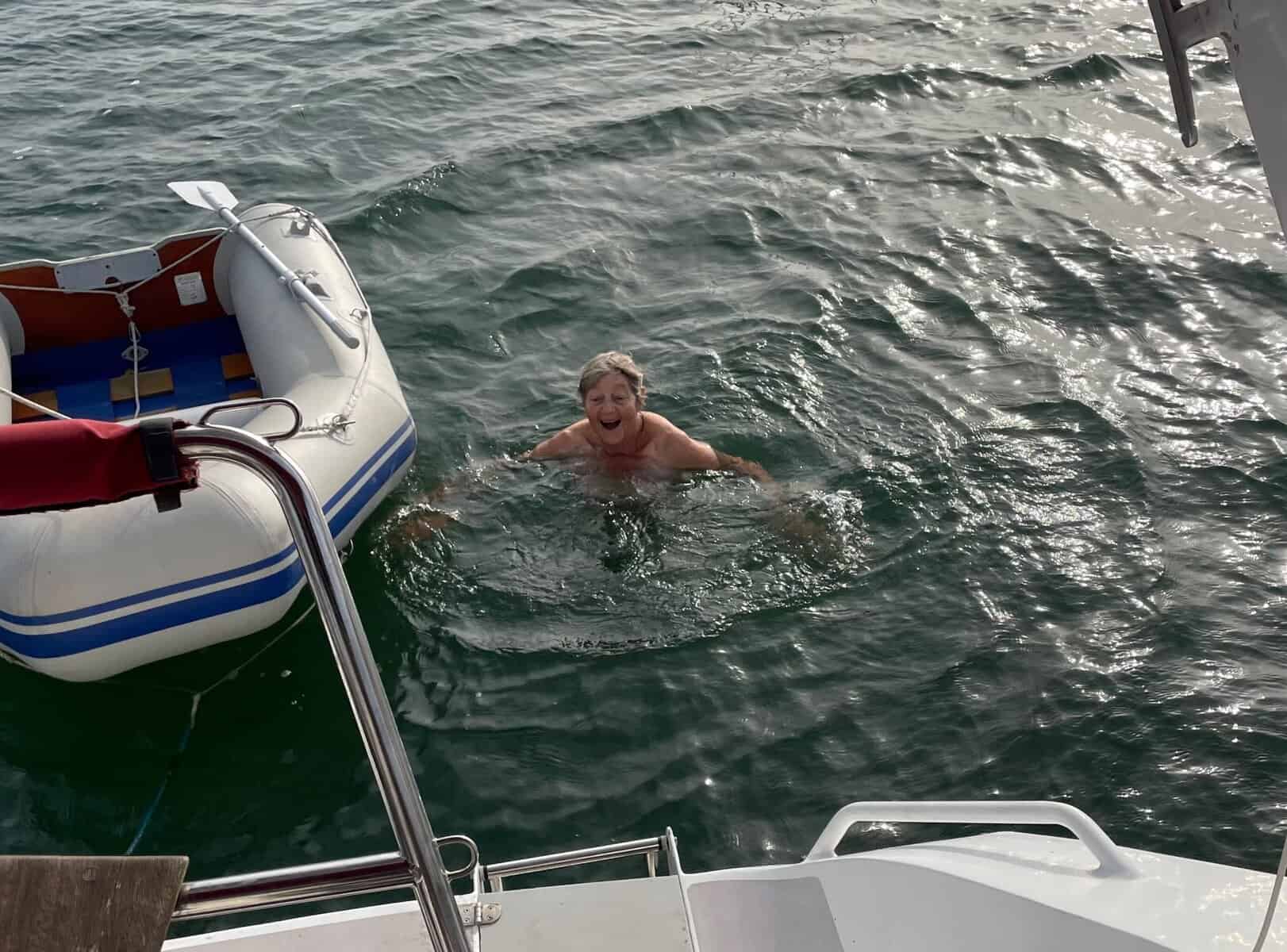
Instead, we anchored in the Beton Haven, a bay in one of the islands forming the barrier. Here we rested for four days and nights. It was very warm and we enjoyed lots of swimming, including before breakfast.
Zeebrugge
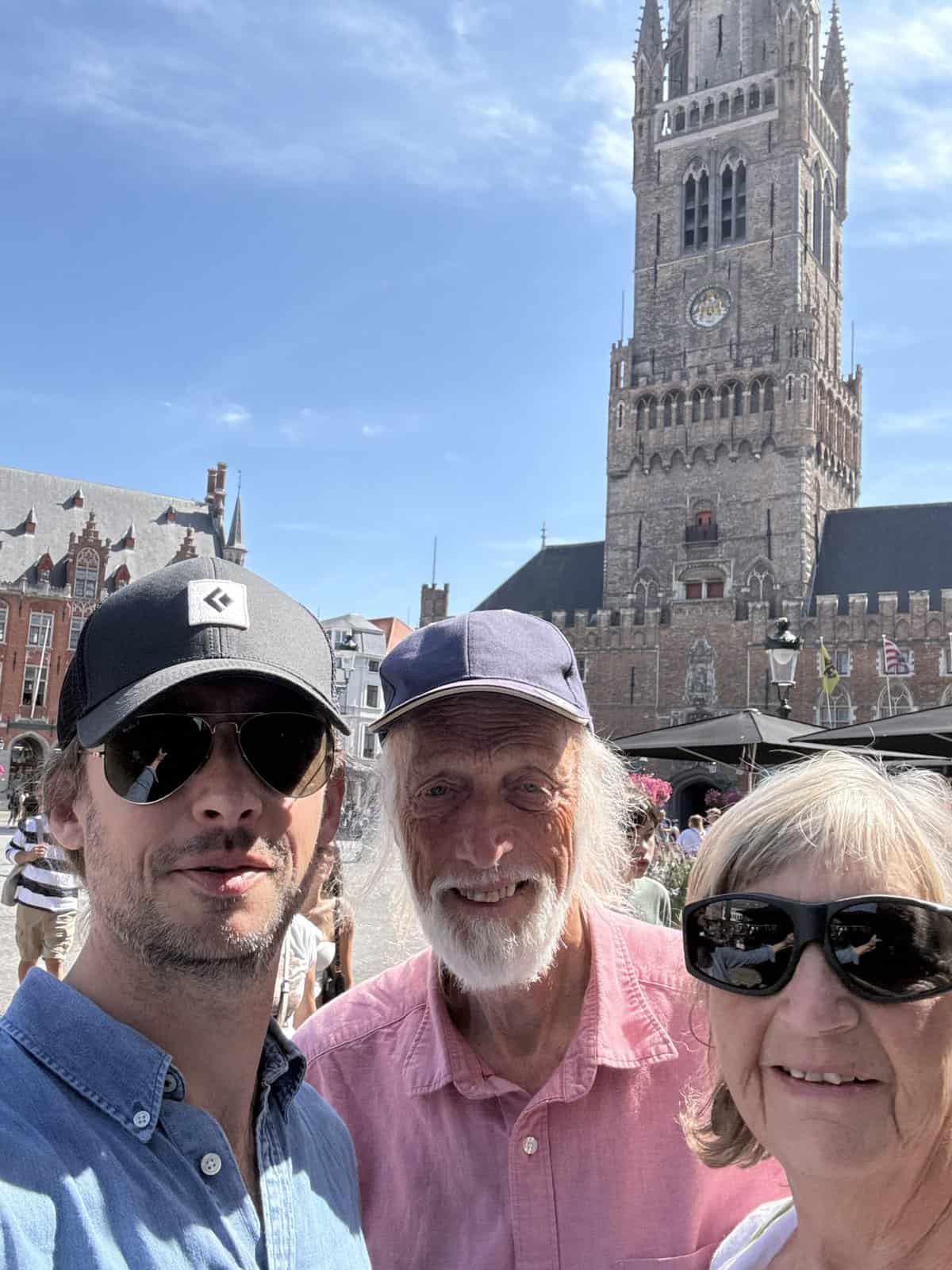
From the Oosterschelde, we had a brisk 33nm run in a fair F4-6 to Zeebrugge in Belgium, so it was a bit rolly. In Zeebrugge we were joined by Ynskje’s son Dan.
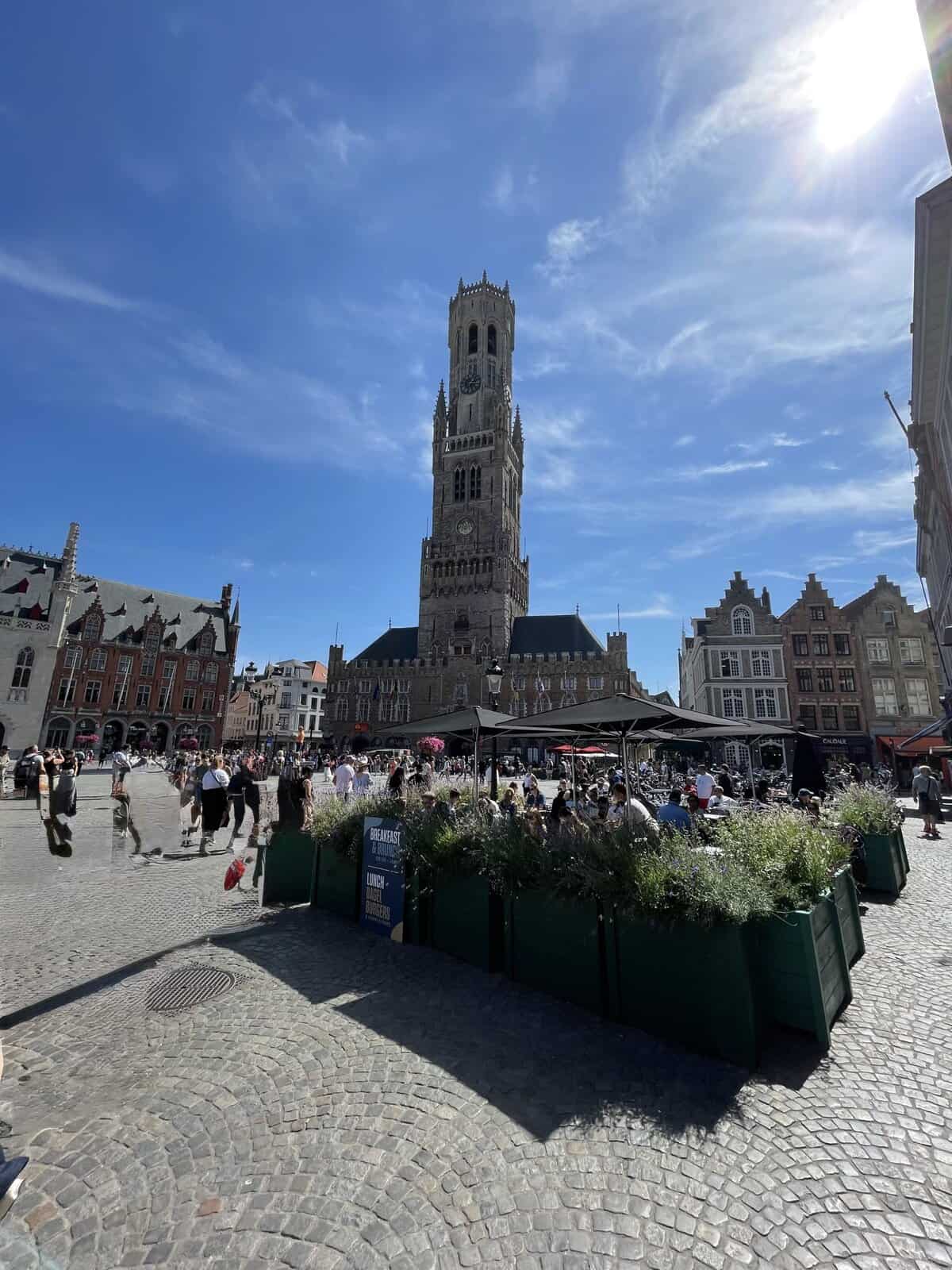
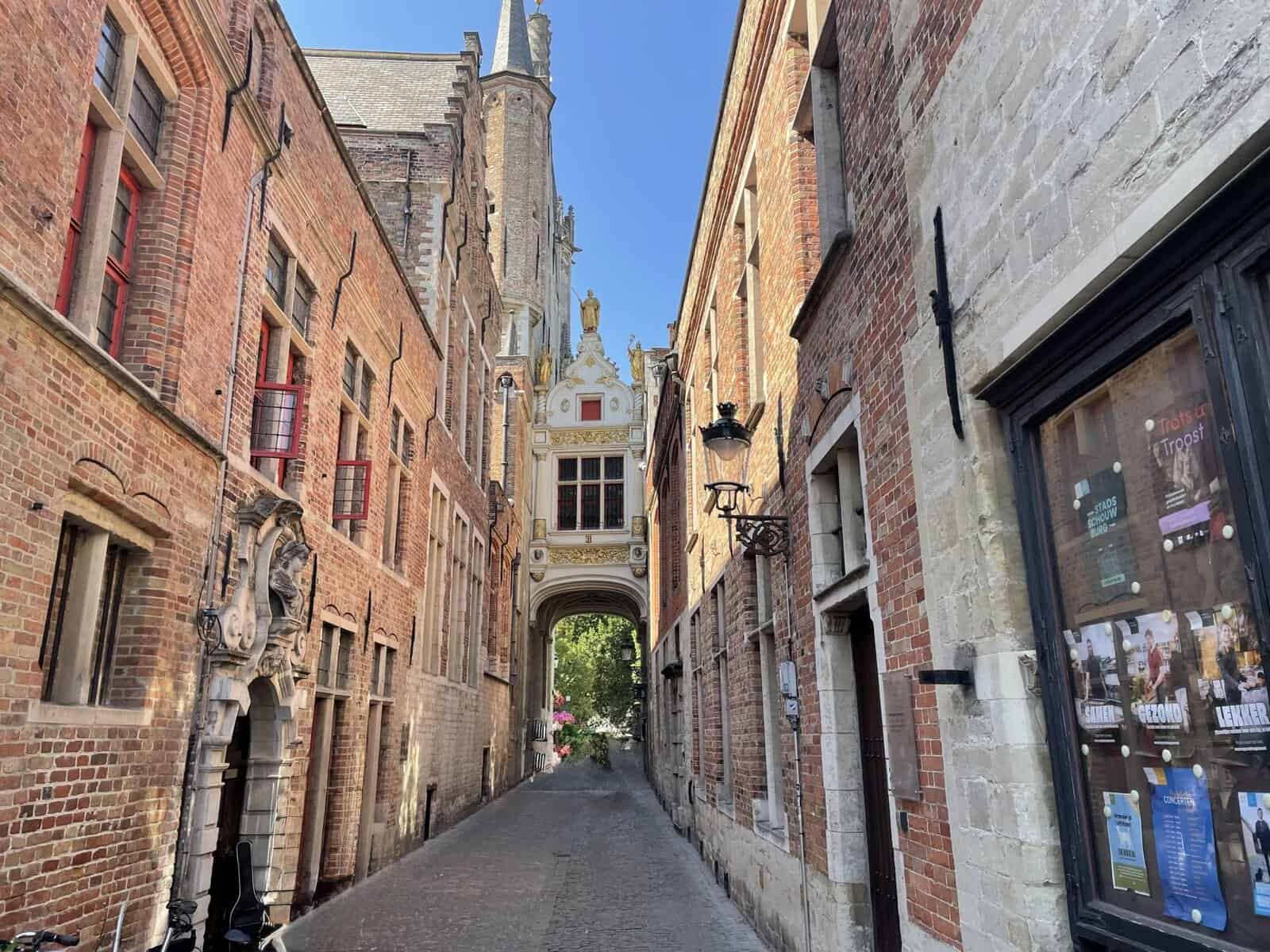
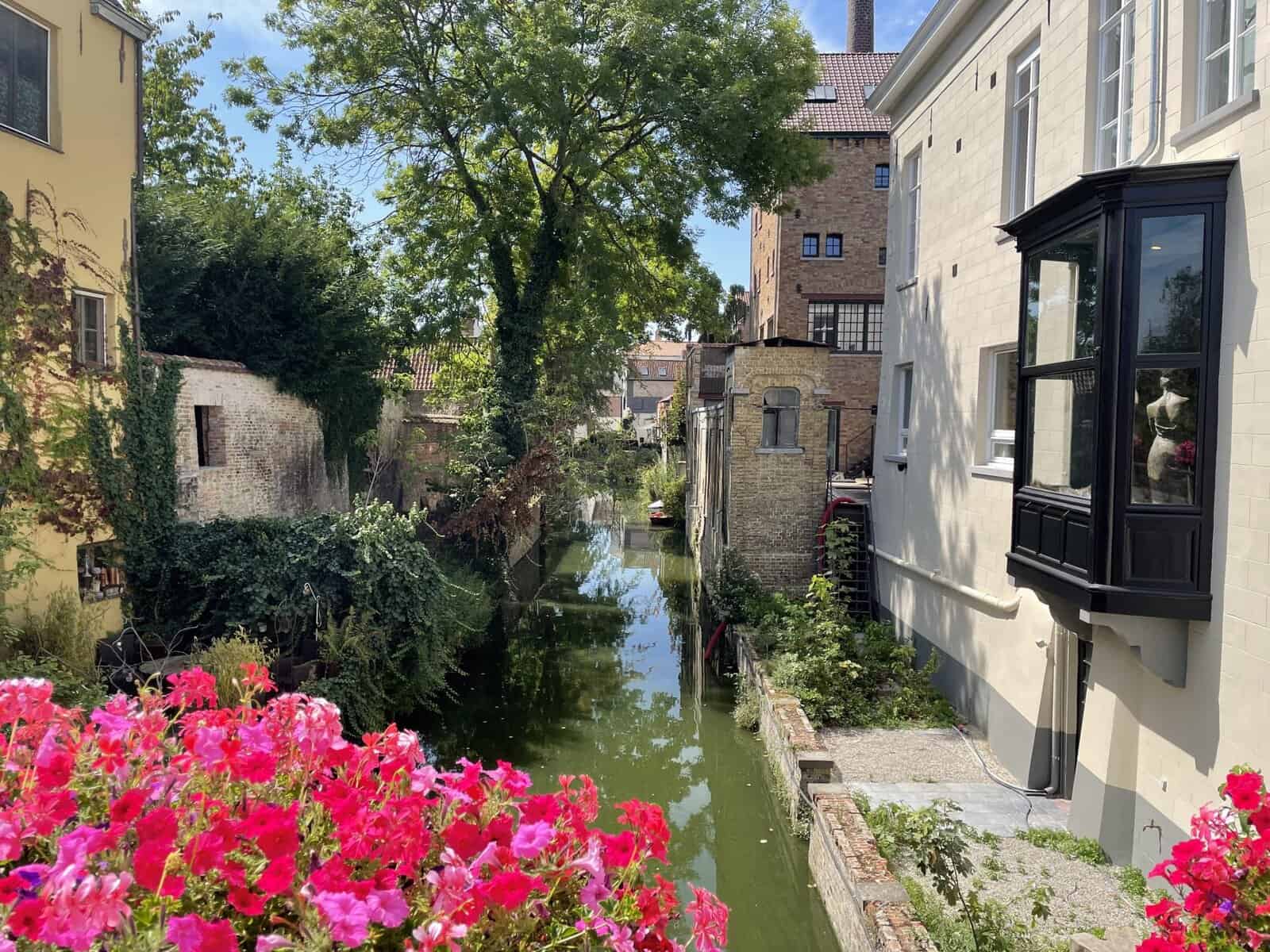
We locked through the Pierre Vandammel lock. This is enormous – 0.3nm long. Pleasure craft have to wait for an opportunity to share it with a ship. Then it was 7nm along the Boudewijn canal through four lifting bridges to Brugge, where we berthed at the Brugge Yacht Club. This is situated in the docks south of Brugge but bicycles got us into the city for an enjoyable day admiring the amazing medieval buildings, riding around the canals and, of course, tasting Belgian beers. Brugge is a wonder.
Nieuwpoort
From Brugge we passed back down the Boudewijn canal in convoy with a large dredger, locked out through the Pierre Vandamme lock and then sailed 33nm west close inshore along the Belgian coast. This took us past several towns comprising many tower blocks in the brutalist style.
Finally we entered Nieuwpoort, the western-most port in Belgium. We berthed at the splendid Royal Yacht Club Nieuwpoort. Nieuwpoort was an unexpected delight. It was virtually flattened in WWI. In the 1920s it was rebuilt and has developed into a pleasant well-to-do city with a good feel to it. It is now a major centre for yachting.
From Nieuwpoort we intend to cross to Dover.
Exiting The Schengen Zone
Since Brexit we have to formally clear out of the Schengen zone and Tony has to get an exit stamp in his UK passport. We would normally sail to Dunkirk or Calais in France for the shortest crossing to the UK. In both those ports the officials are located in the ferry ports, which are a long taxi ride or complicated bus ride from the yacht harbours. We chose instead to exit from Nieuwpoort. Here the police visited Antipole by appointment so we could complete the paperwork. They were carrying a portable safe case from which they produced the necessary stamp.
That’s our news for now
Tony, Ynskje & Dan