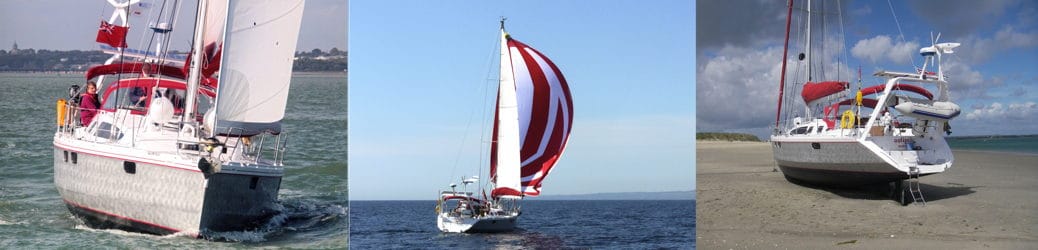
From Texel we had an excellent sail to Den Oever, where we locked through into the IJsselmeer.
The IJsselmeer
The IJsselmeer was created in 1932 when the Afsluitdijk was completed to close off the former Zuiderzee to protect much of the surrounding coast from flooding. This has created a large area of shallow water – mostly ca 3m deep. It provides excellent sailing, although it can be tricky in strong winds when nasty seas pick up in the shallow water.
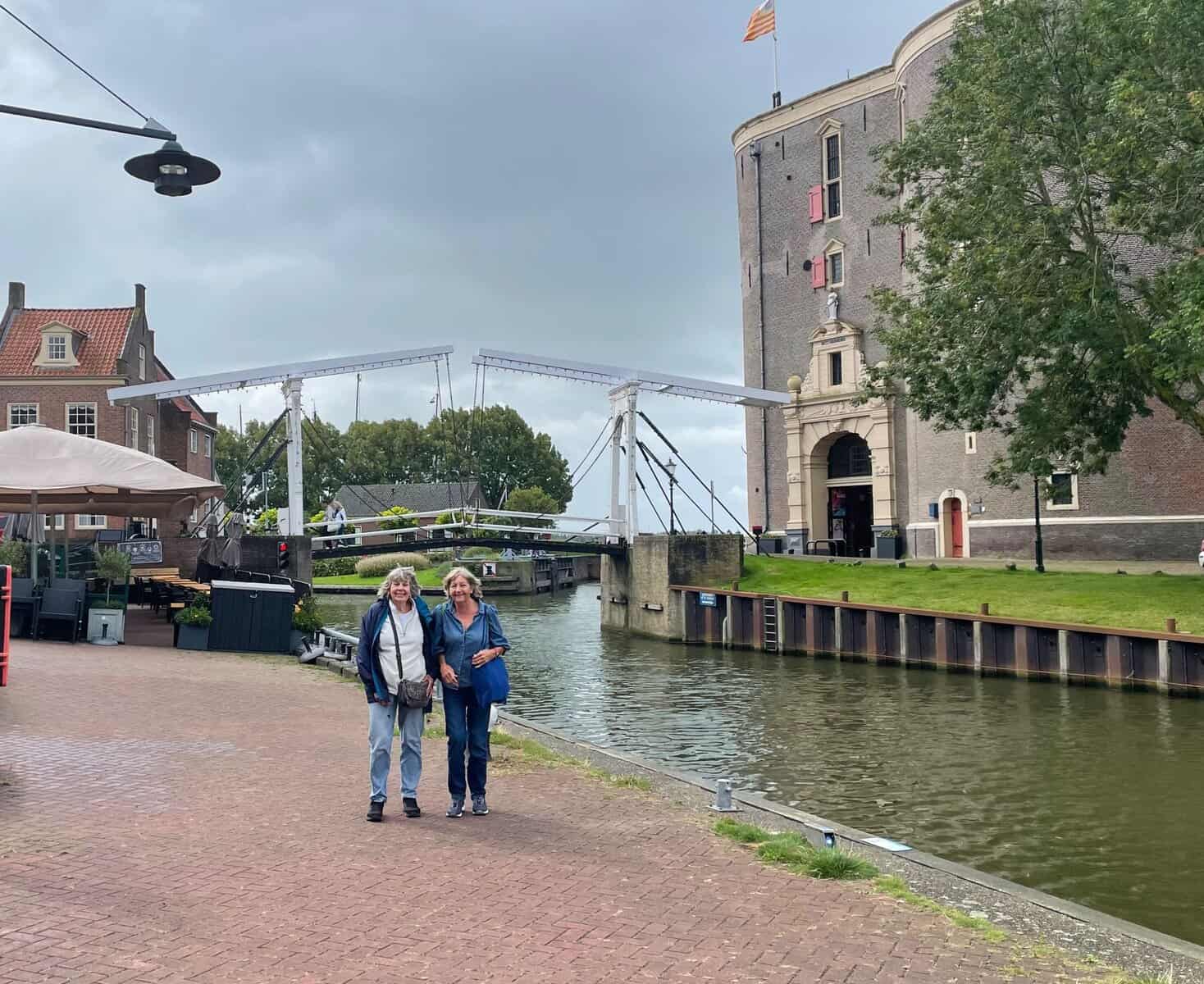
We sailed on to Enkhuizen. In earlier times, Enkhuizen was the headquarters of the Dutch East India Company and was prosperous. Today it is very attractive. We have previously visited in 2012 and 2019. In Enkhuizen we were joined by Heleen.
The Markermeer
From Enkhuizen, we locked through the Markerwaarddijk into the Markermeer. This dyke was completed in 1976 dividing the IJsselmeer. It was planned to polder the whole area. (Poldering is how the Dutch create new land from the sea. It is said that God made the world but the Dutch had to make their own country.). In the end, only Flevoland was created and plans for further poldering abandoned. This has left a large area of shallow water with no significant river bringing in fresh water. Further, the margins are all previous flood defences., so there are no natural shores. The water quality has deteriorated and there is little life in the water apart from weed, which grows profusely. It now has to be mown under water to keep the channels open. A website shows where the weed is problematic and when it was last mown.
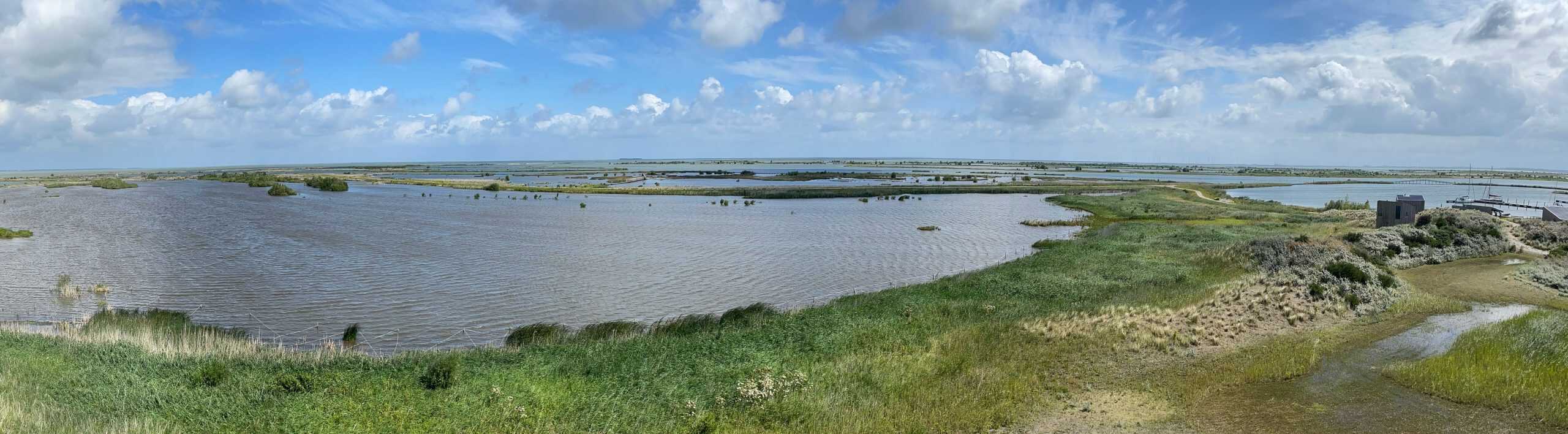
To help improve the quality of the water, starting in 2016, new wadden islands have been created. They have sand dunes on one side and extensive shorelines for reeds and marshes. They have been an ecological success with many hundreds of different species establishing themselves. Part of the wadden is open to visitors. We berthed there and enjoyed exploring.
Amsterdam
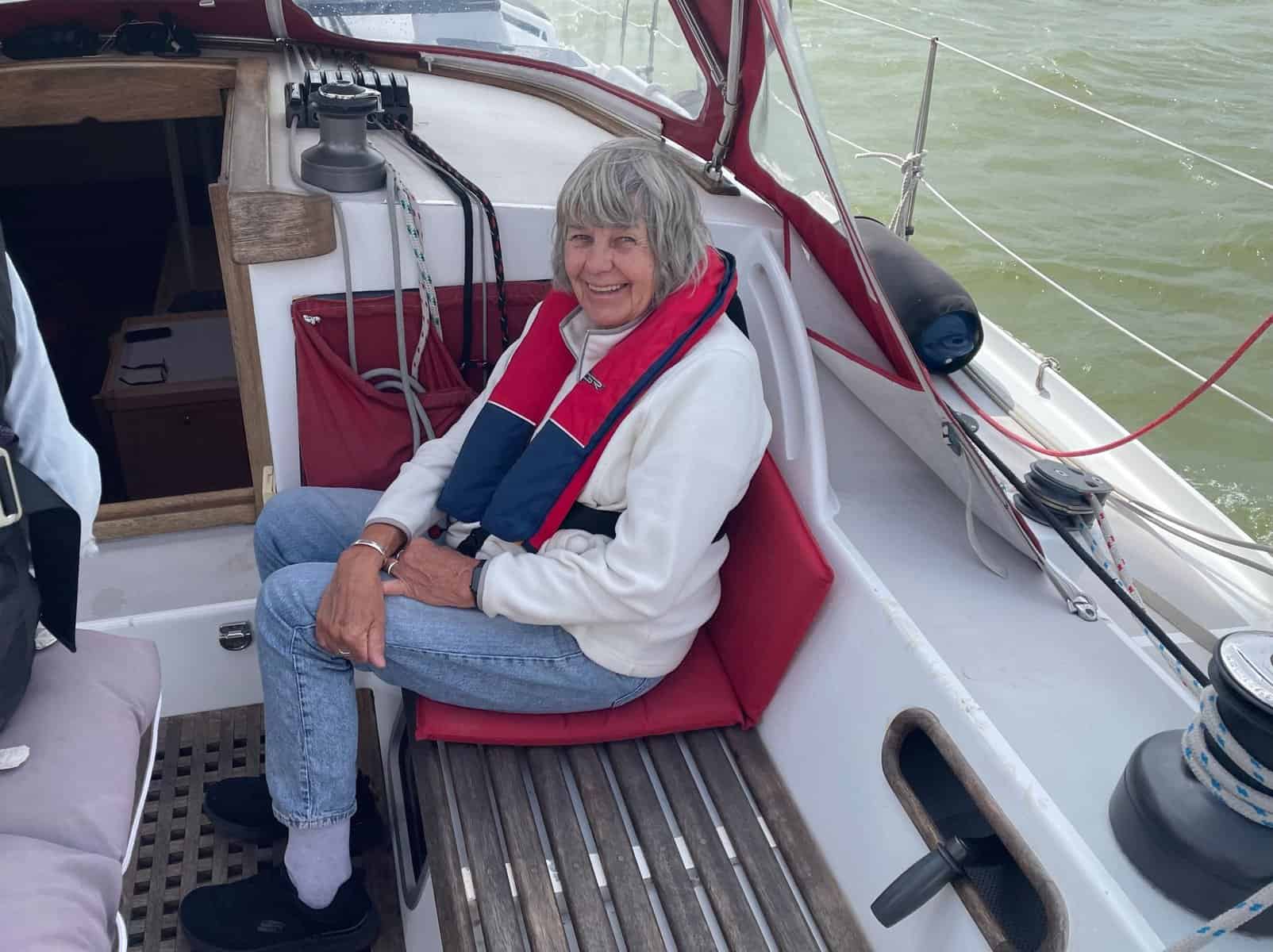
From the Marker Wadden we had a good sail under the stay sail and a reduced Genoa to just outside Amsterdam, where we anchored – choosing our spot carefully to avoid the weed. The next day we passed through the Schellingwouderbrug (bridge) and the Oranjesluizen (locks) to arrive at Sixhaven, a marina right in the centre of Amsterdam. In the past, Sixhaven has been notoriously chaotic, as we experienced in 2012 and 2019 . Now it has modern pontoons and is much improved but still gets crowded at times. Here we paid off Heleen.
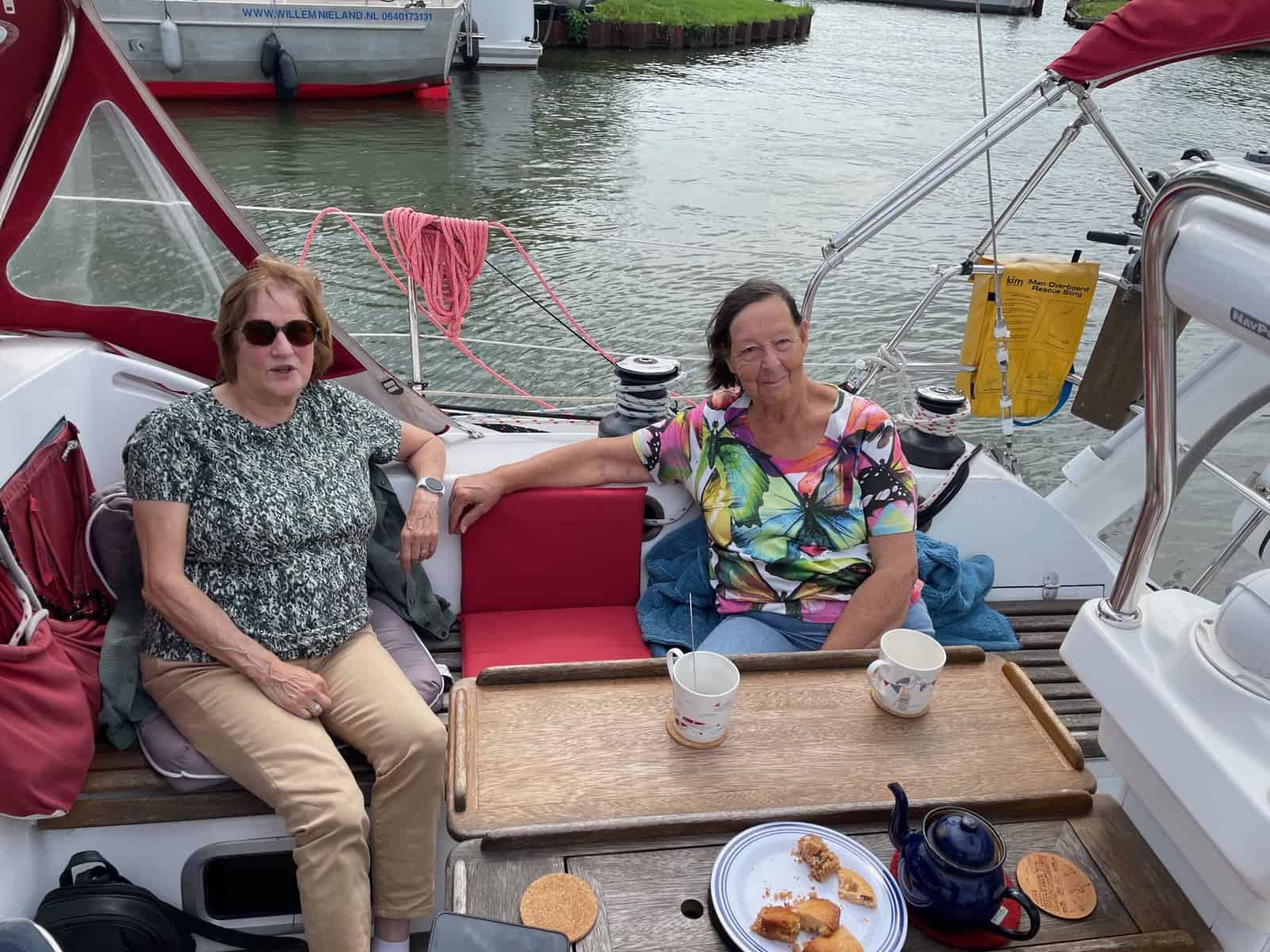
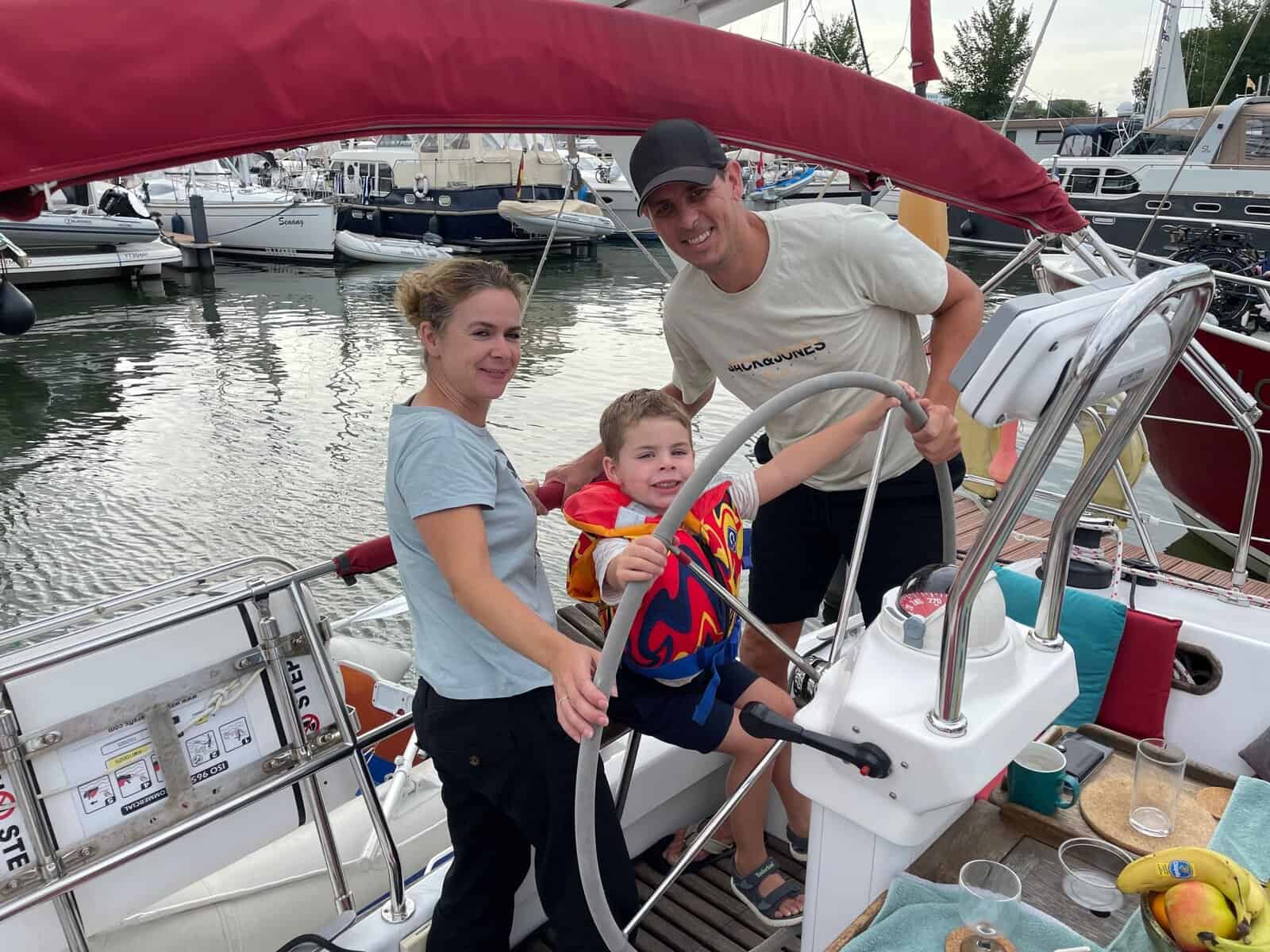
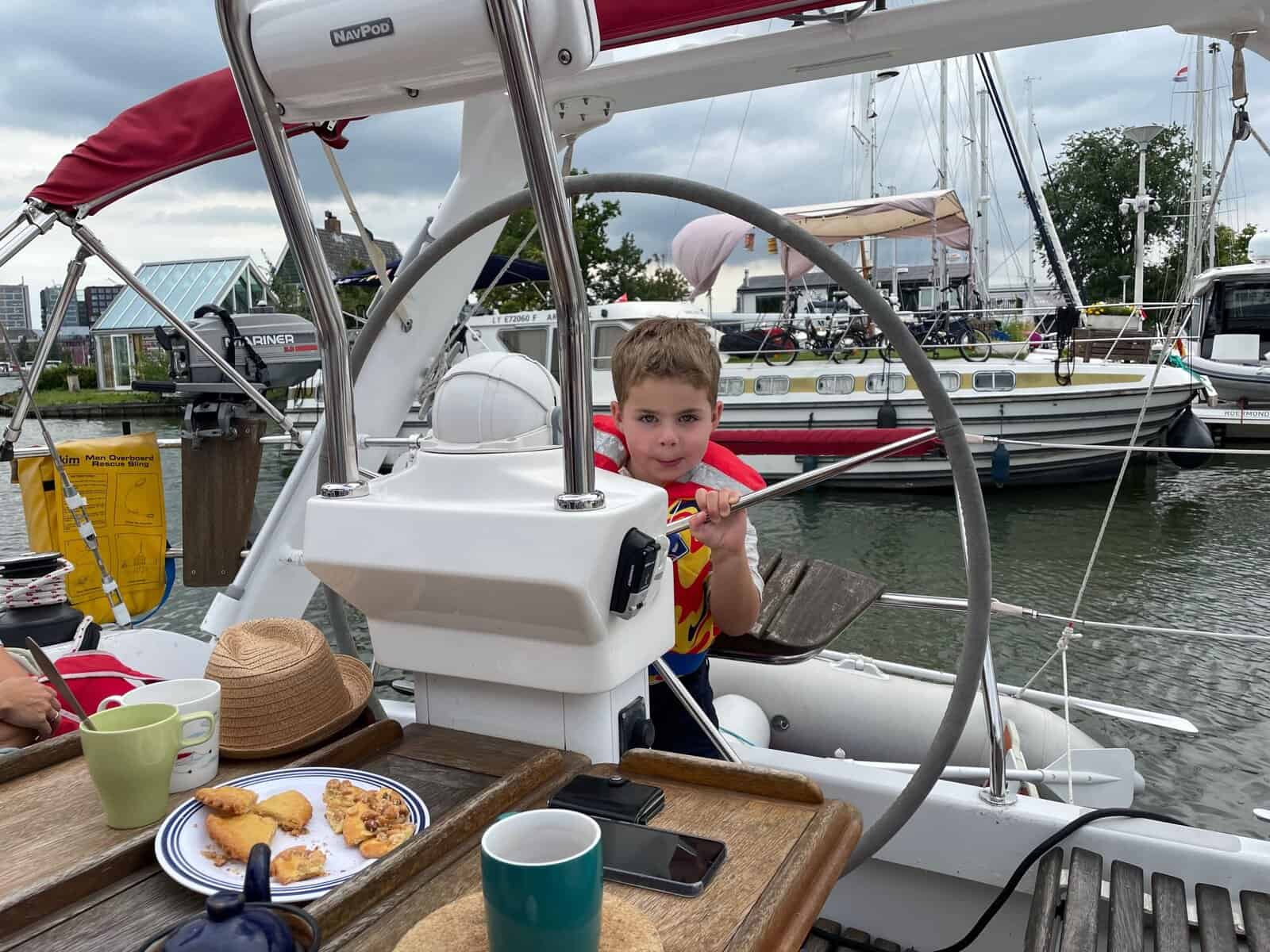
Ynskje enjoyed showing Tony around central Amsterdam – her home city. But she is appalled at how busy and spoilt it is with large numbers of tourists. Sixhaven remained a quiet oasis by comparison. While there we were visited by Ynskje’s sister Corrie and her friends Marianne and later by her nephew Raban and his family.
From Amsterdam, we will pass along the North Sea Canal to IJmuiden before heading south down the coast.
love, Ynskje & Tony
Hello Tony & Ynskje,
I have been really enjoying reading your adventurous sailing log. What beautiful places you have visited with such interesting voyages to take you there. Graham is beyond jealous!
The area you have recently sailed through is the one we know well from our trips with friends out of Hoorne.
We know the IJsselmeer & Makermeer really well & have many happy memories of Enkhuizen. Loved sitting with a coffee watching the big Dutch barges approaching the lock there.
Unfortunately we are not sailing with our friends this year.
Your photos show some really happy times with family & friends. I hope you are enjoying your Amsterdam visit despite all the crowds. It has so many incredible sights to see & enjoy as Ynskje will know so well.
Enjoy the remainder of your travels with hopefully kind weather.
Love to you both. Liz.
How lovely to see the photos of your friends and family Ynskje. Your post sounds relaxed so I am assuming that you have had a more relaxing time latterly. We look forward to seeing you back in the UK – but enjoy the last bits of the trip.