Shiermonnikoog
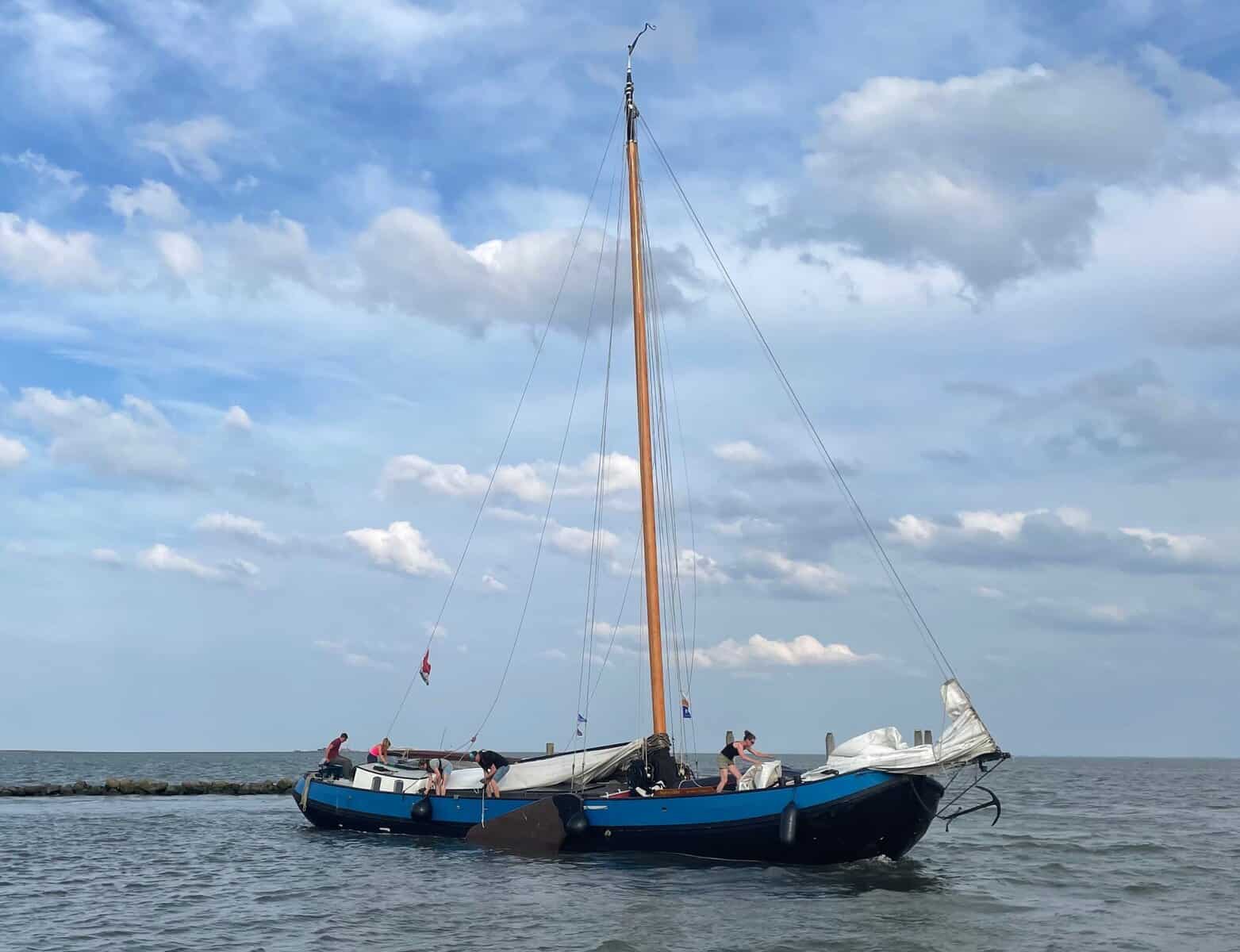
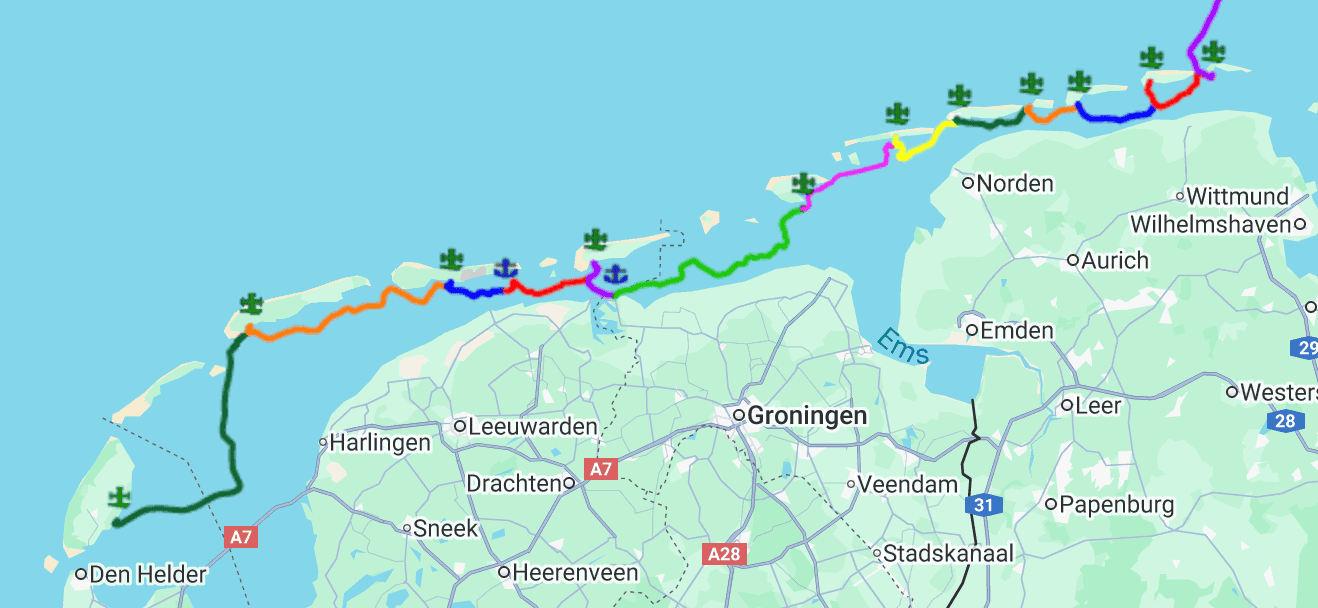
From Borkum we crossed the Emms estuary into the Netherlands, so we will now use the Dutch words. It was 34nm across the wad, with three wantij – parts of the channel over raised wad that can only be crossed with sufficient rise of tide. This was not possible on a single high tide, so we anchored off Lauwersoog and continued the next day on the next tide to arrive at Shiermonnikoog – meaning in Frisian “the island of the grey monks” (Greyfiars had a monastery here).
In these waters, plattebodem (traditional flat-bottomed boats) of various types are very popular. There are many old boats restored but also new-builds of the traditional type. About half the boats in Shiermonnikoog harbour were plattebodem.
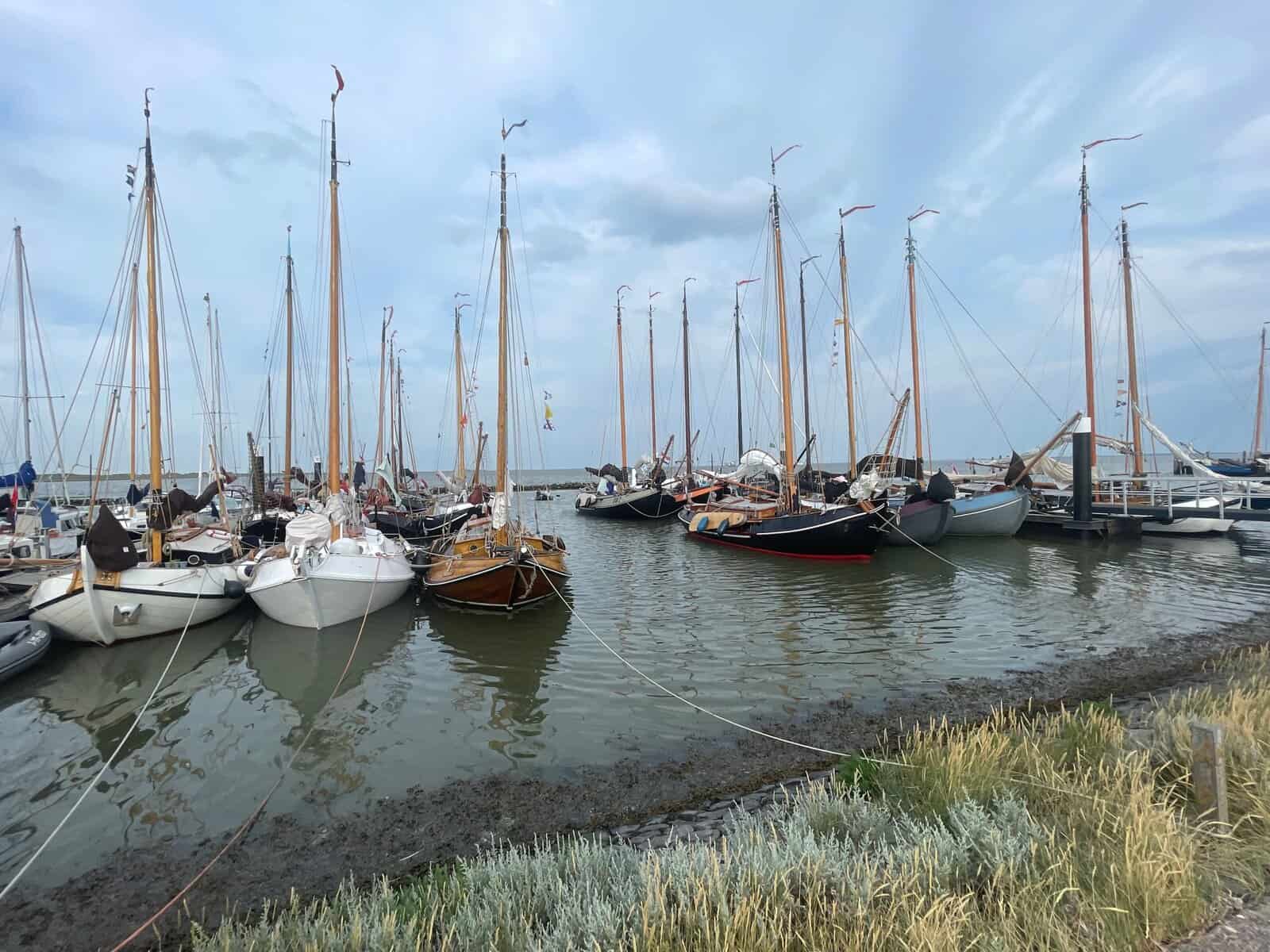
We found Shiermonnikoog delightful. It has lots of summer visitors but was peaceful none-the-less. There are excellent cycle paths throughout the dunes and natural areas, which we enjoyed.
Ameland
From Shiermonnikoog it was 20nm across extensive wad, which we could not complete on one tide. So we passed over the first few wantij and then anchored for six hours until the next tide on which we completed our passage to Ameland. It was very shallow and we were pushing along the bottom, even with the plate and rudder right up. We draw just 58cm like this, so it was remarkable to see a 25m commercial craft pass by without trouble.
When we called at Ameland in 2012, we had an ‘interesting’ time manoevering in the harbour. Since then, a pier has been built out over the wad to provide all-tide access for ferries and a much enlarged harbour for pleasure craft. Even so, it was pretty full. We had to be up early one morning as some boats trapped by us and others wanted to leave.
Ameland is 24km long and has four villages Buren, Ness, Ballum and Hollum. The largest, Ness, is picture-postcard pretty and very crowded with holidaymakers. On market day, we could hardly move for the throng. We cycled to all the villages and returned along lovely cycle paths through the dunes.
We visited a working windmill and Tony was able to climb up to inspect the works.
On the day we visited, it was grinding mustard and we purchased some of the final product.
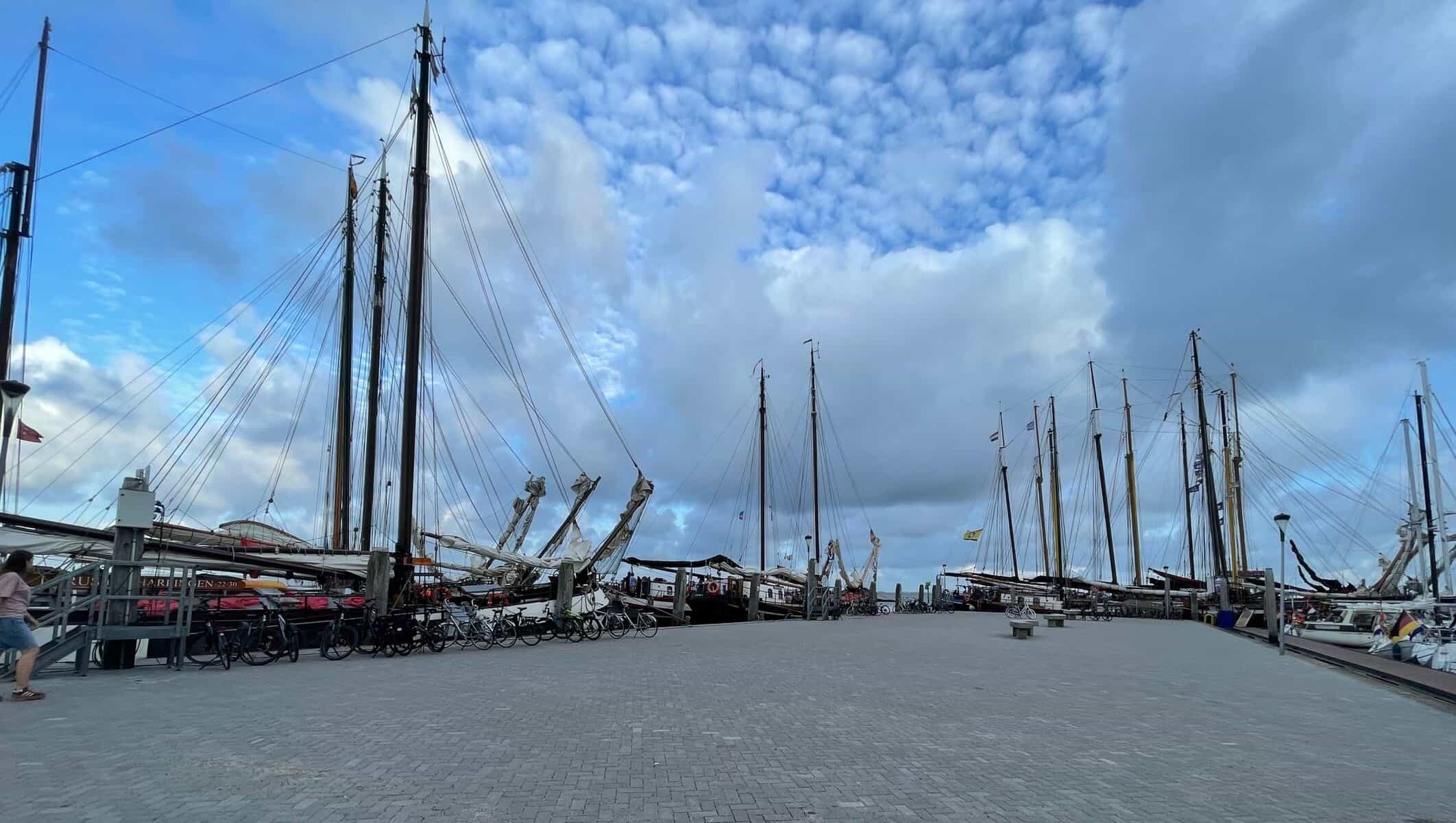
The Netherlands’ so-called ‘brown fleet’ of large sailing barges are popular for holidays and often chartered by school classes. It is a condition of the school groups that the children must earn the cost of the holiday themselves and not be funded by parents. There were ten of these boats in Ameland harbour.
Terschelling
A good 25nm sail over the wad brought us to the large island of Terschelling. We berthed in the vast marina in West Terschelling.
Terschelling is largely agricultural but today very much a holiday island, with many camp sites with access to the long beach on the northern shore.
The main town of West Terschelling was busy with shops, restaurants and bars. The town centre is dominated by a huge tower, which today functions as lighthouse, radar post and control centre for maritime traffic.
We cycled 14km east to the village of Hoorn and returned along lovely cycle paths through the dunes and woods.
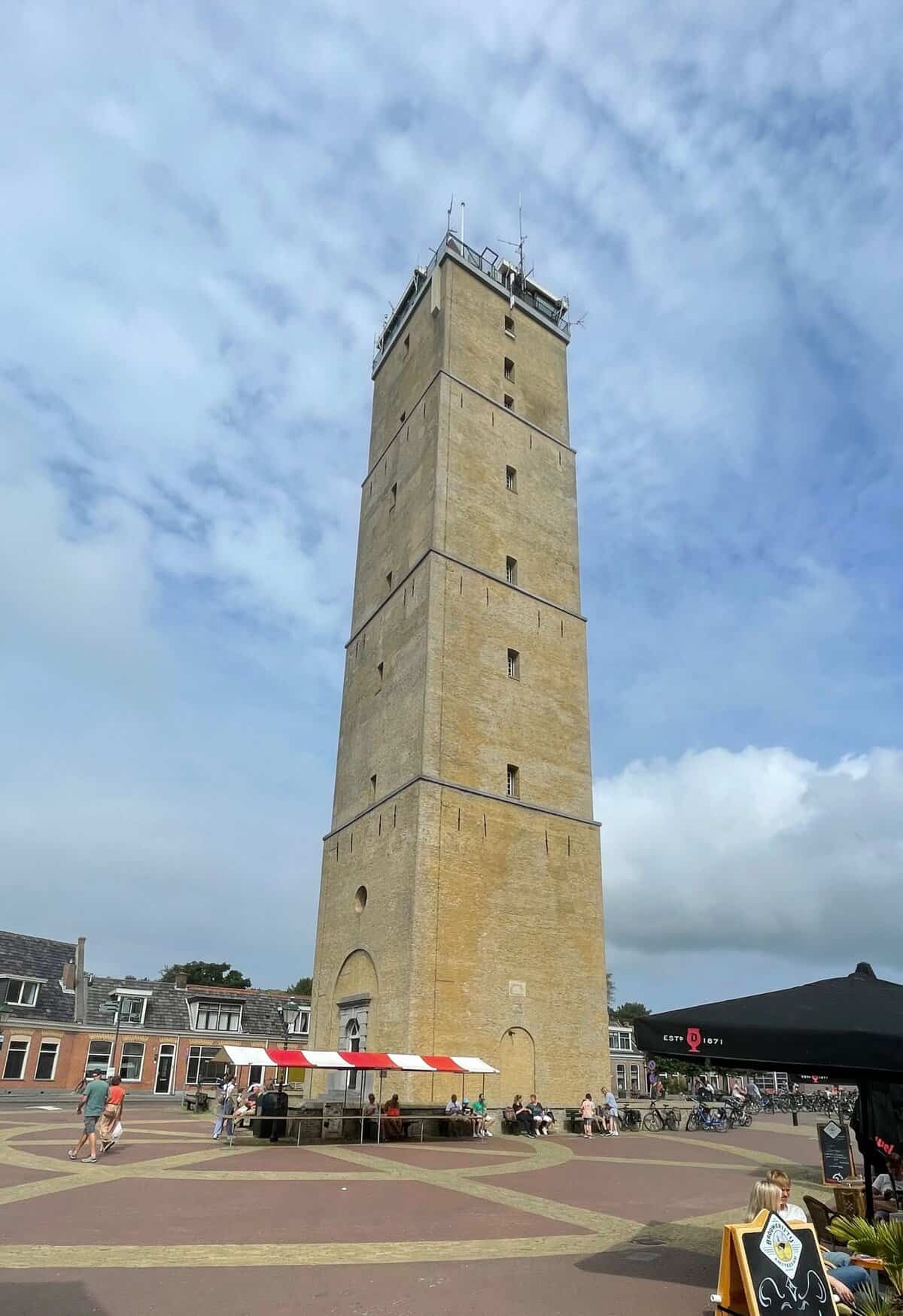
Texel
The next island westward is Vlieland, which we visited in 2012. But it is the height of the holiday season now and we heared the harbour was full and the island crowded. More than one person referred to it by its nickname Vliebiza, so we decided to give it a miss.
Instead, we had a magnificent 32nm sail to Texel (pronouced Tessel) in NW4 and a clear blue sky – perfect conditions. Clearly others liked the conditions too, for there must have been over a hundred yachts under sail.
Texel is less than 2nm from Den Helder on the mainland and people cross on the frequent ferry. It does not have the feeling of an island. Historically, it and neighbouring Vlieland are Dutch-speaking rather than Frisian-speaking and so do not really pass as Frisian islands.
We cycled to the main town Den Burg, which is a delight of narrow streets and interesting shops.
We were visited by Ynskje’s niece Yvonne and her husband Frits, who have a caravan on Texel.
In 2019, they had sailed with us from Spiekeroog across the wad to Langeoog.
We cycled 12km along the dyke to visit them at their caravan near Den Hoorn before enjoying lunch at a beach pavilion.
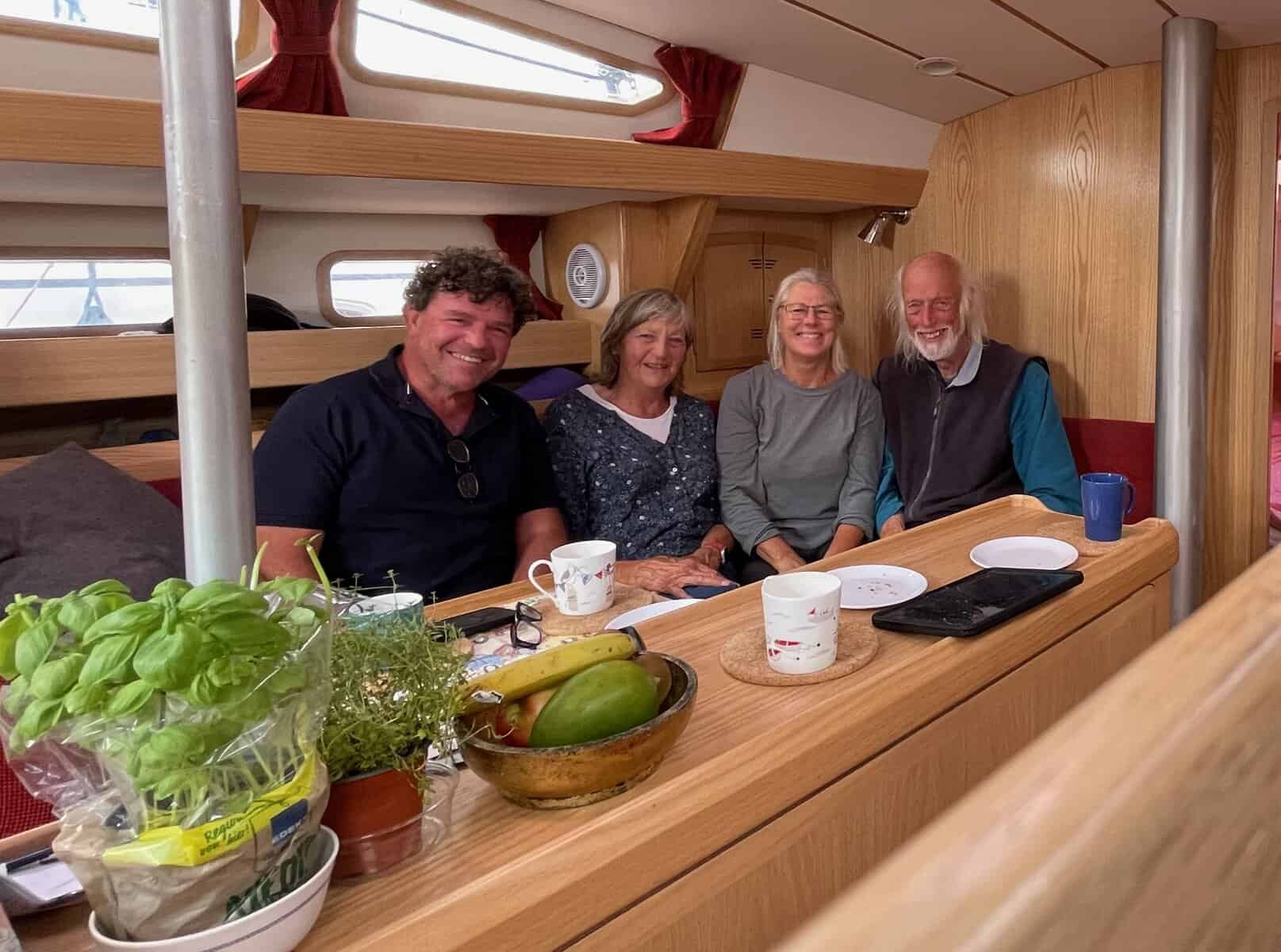
After Texel we will be leaving the Wadden Islands and heading for the IJselmeer.
Ynskje & Tony xxx
Another very interesting part of your trip. It all looks unusual. The shallow waters remind me of sailing in the upper reaches of the Dovey. It must be great to see some family, Ynskje. I expect you will be seeing more friends and family. I wonder what it is like to sail the Plattebodem boats. This interest shows my love of dingy sailing. Sadly no more!