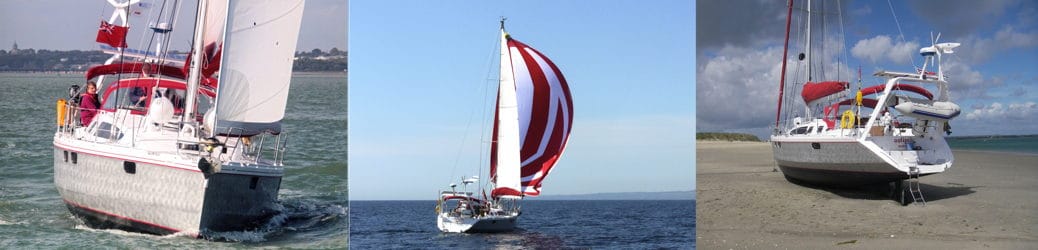
We had a 7:00am start from Bagencop to catch the fair wind. With F3-4 in warm sunshine, we had a delightful sail to Kiel, in Germany. Tacking down the Kieler Bucht against numerous yachts and several galleons coming the other way, not to mention a couple of tankers, made an interesting final stretch.
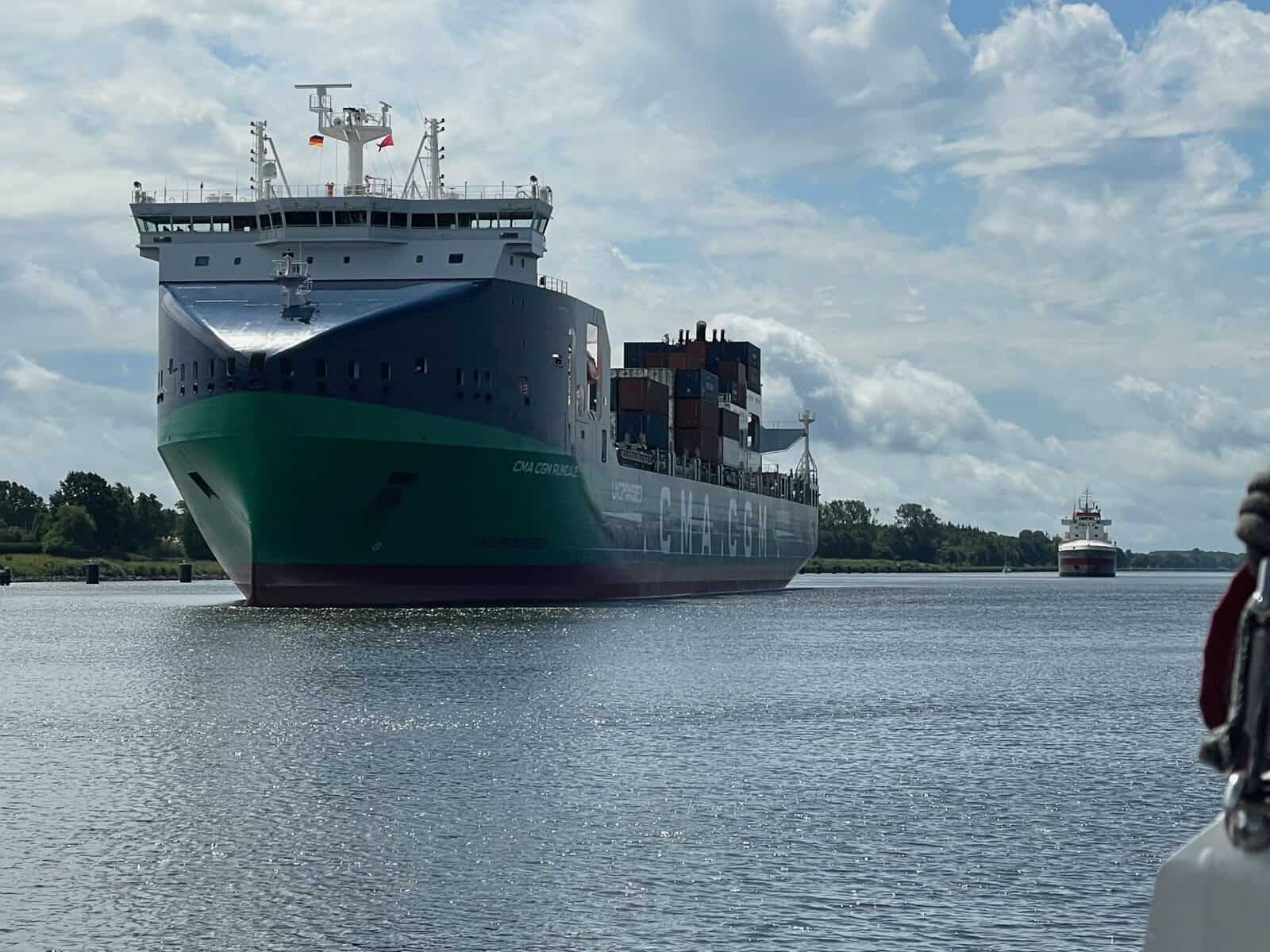
We arrived just after midday and, having made such good time, decided to go straight into the Kiel Canal or Nord Ostsee Kanal (NOK) as it is known in Germany. We shared the vast 310m long lock with a couple of cargo vessels and six or so leisure craft. After 7nm motoring against the wind we turned off into the small Flemhuder See to stop overnight. The next day we motored 25nm against the wind to Gieselau.
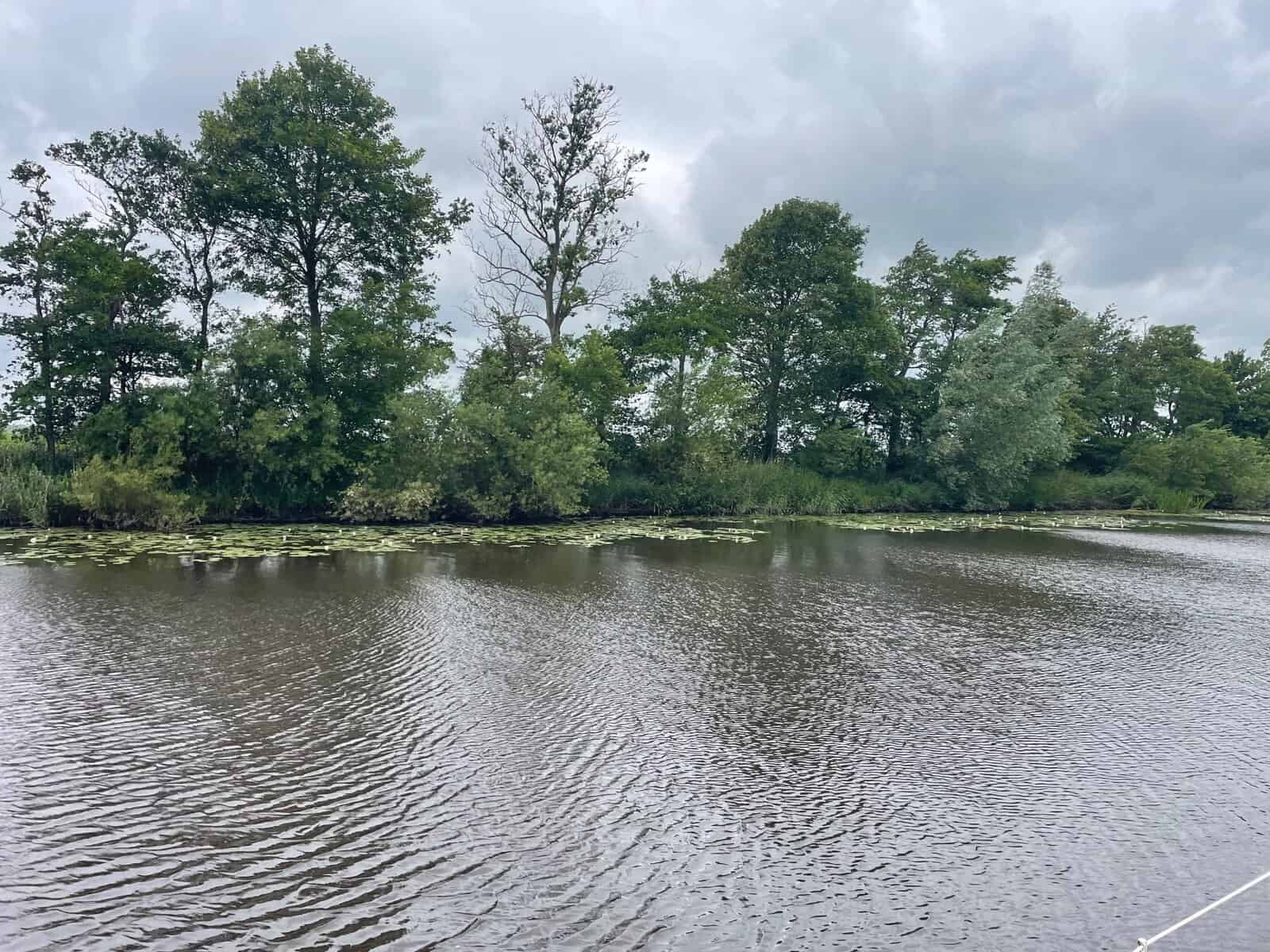
At Gieselau we turned off the NOK into the very short Gieselau canal and, the next morning, locked down ca. 0.5m into the River Eider. The Eider is a lovely quiet river that meanders through fenn-like pastures. It is fringed with reeds and lined with water lilies which, on our visit, were in full flower. Initially, it was idyllic. It reminded us of the Dutch waterways or the Norfolk Broads.
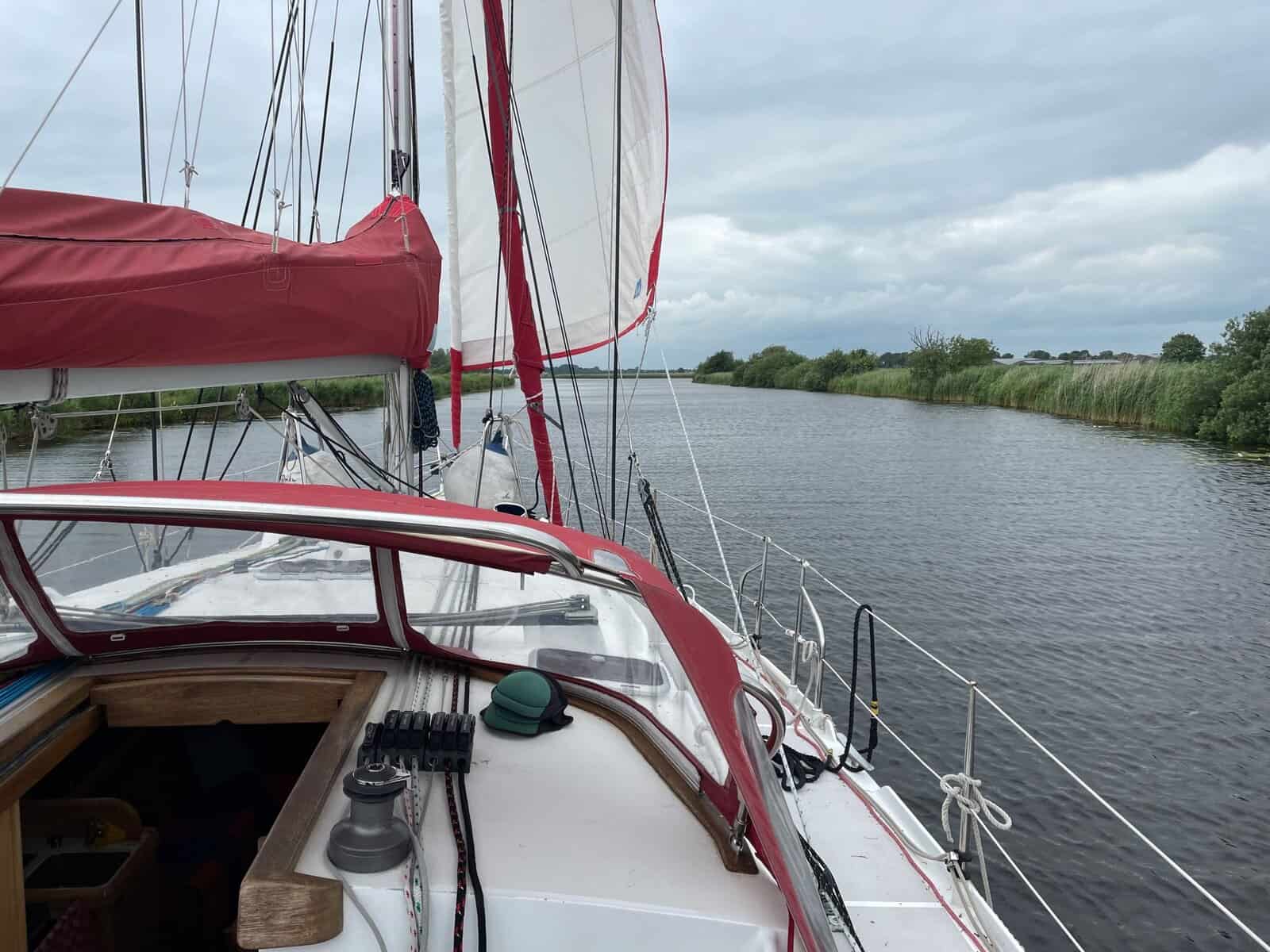
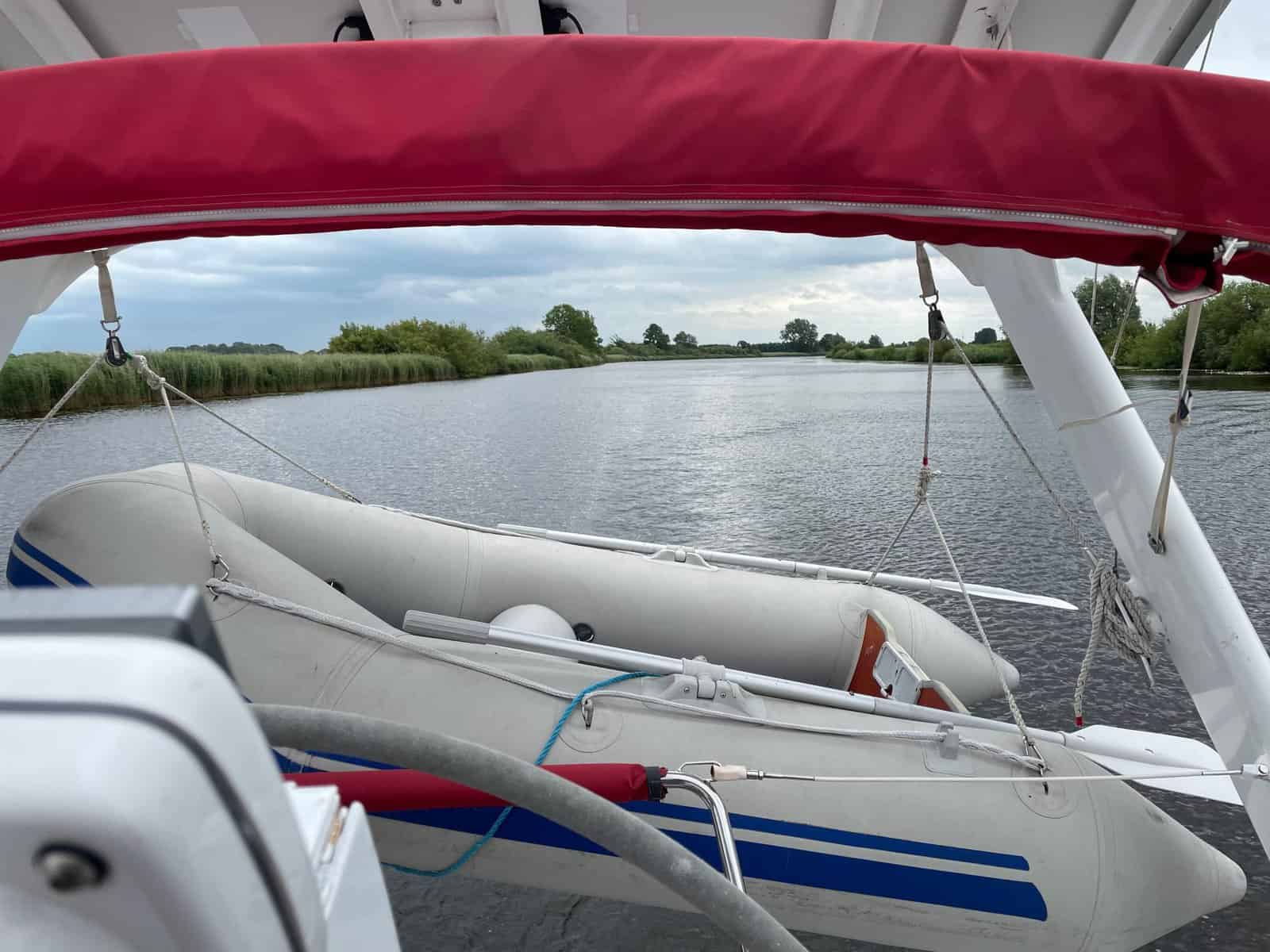
We had anticipated short stretches and pleasant evenings anchored in some quiet bend. Unfortunately, that was not to be. The wind built steadily to F7 and our anchor failed to hold in the soft mud. We had to find a mooring.
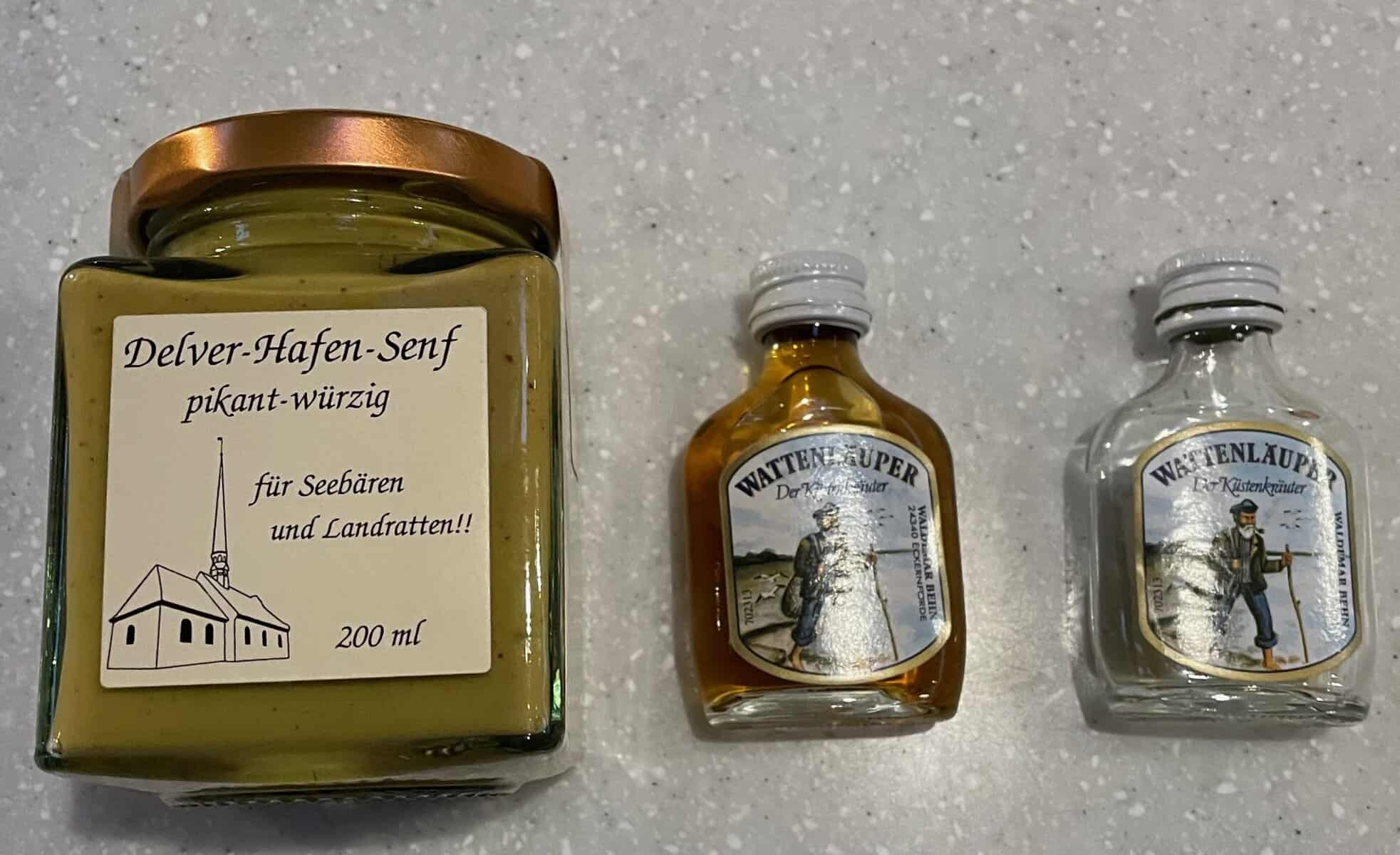
There are several small marinas on the river catering for local boats but they were all box berths too narrower for our 4.1m width. We ended up having to go much further than we intended, passing through further locks and bridges until we found an alongside berth at Delve after 17nm. There we were welcomed with gifts of own-made mustard and miniatures of Wattenläuper schnapps.
From Delve it was another 14nm along the very meandering river to Nordfeld, where there is a huge dyke to hold back the North Sea. We locked up into the tidal section of the Eider and reached Friedrichstadt, where we locked down into its harbour.
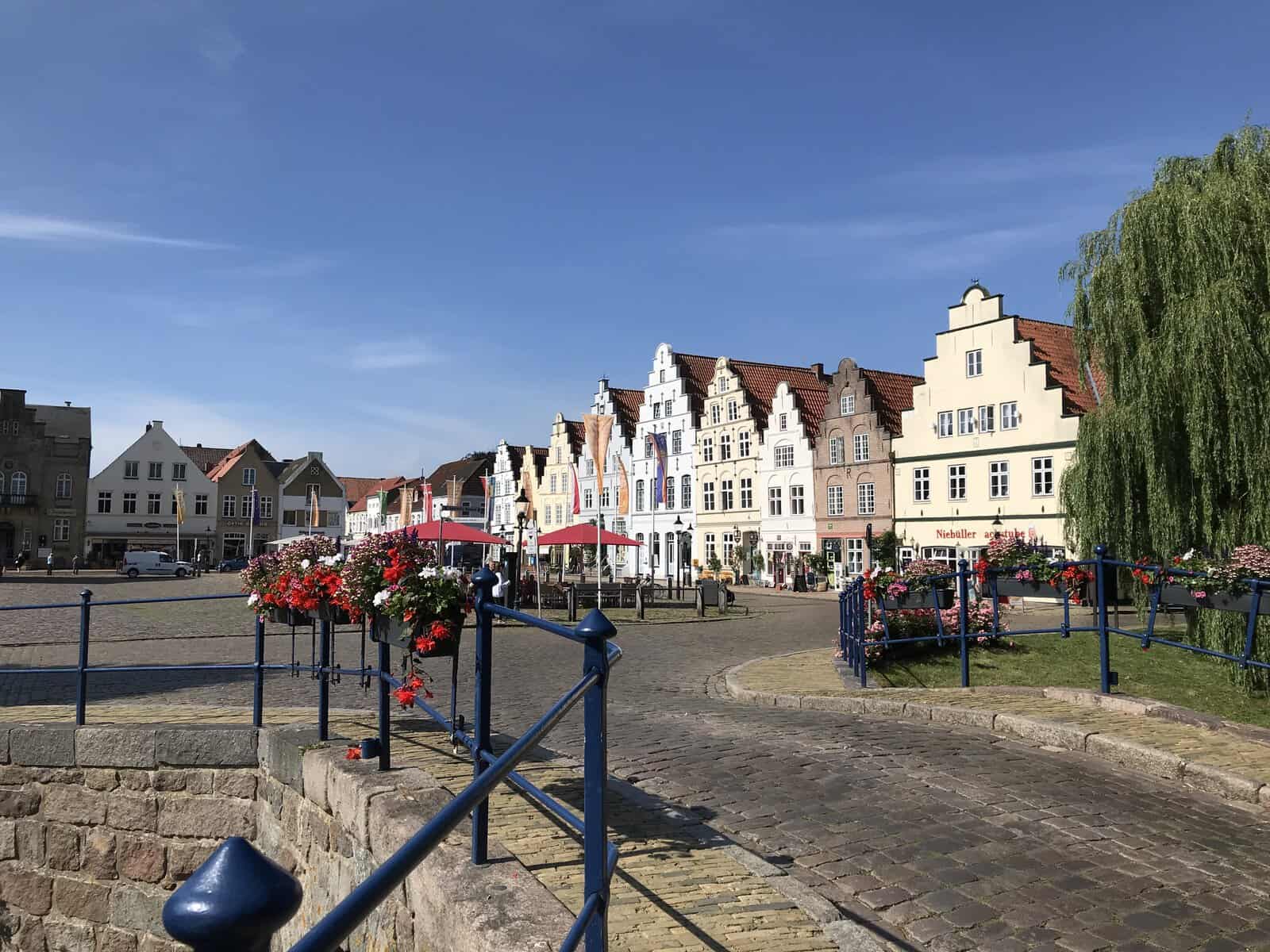
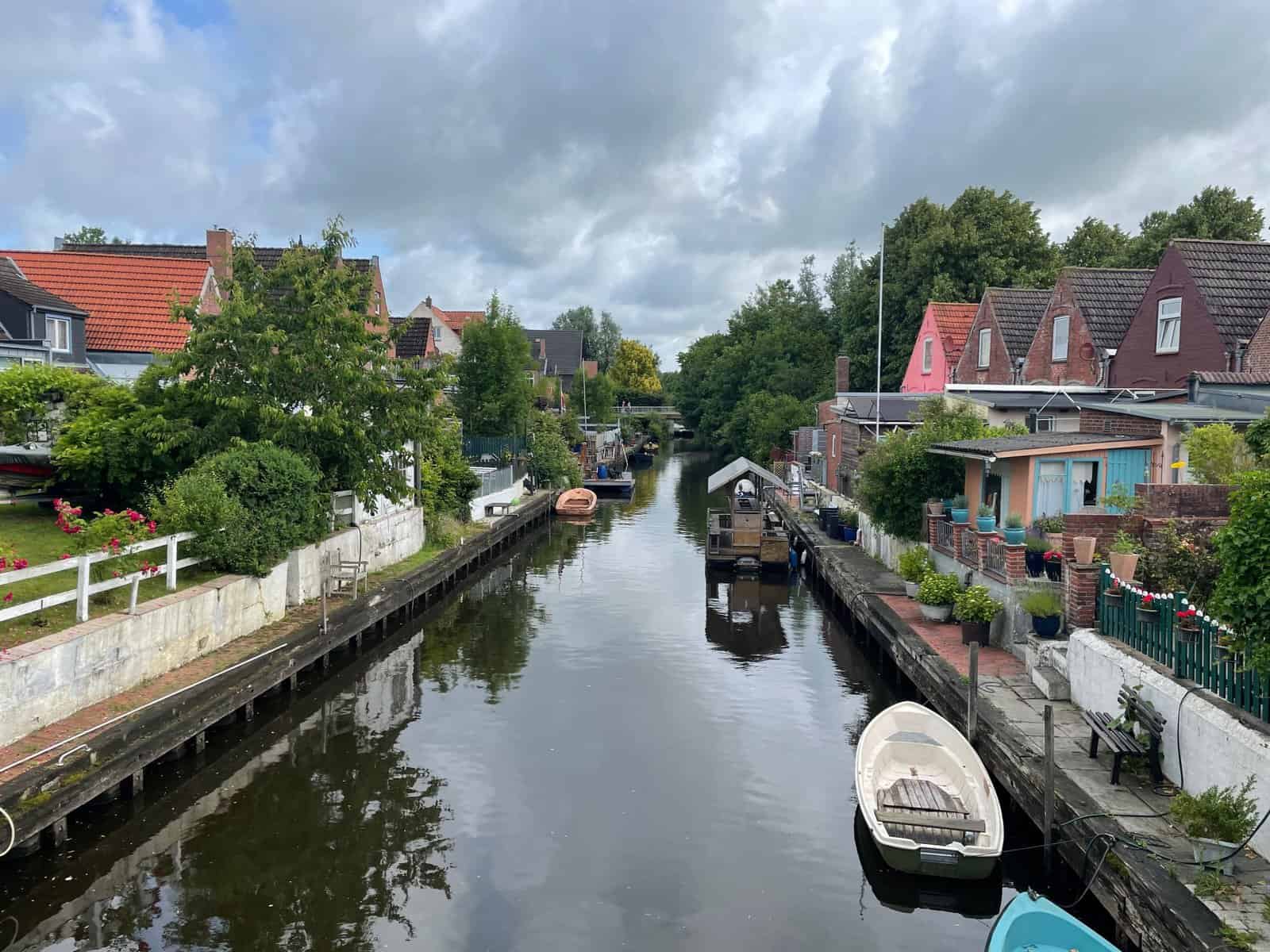
We visited Friedrichstadt back in 2019, when we cycled over from Tönning. Friedrichstadt lies at the confluence of the Treene and Eider rivers. Back in the 1600s, there were serious problems with flooding and so Duke Frederich III sent for the Dutch, as one did with flooding problems, and invited them to establish a town. The Dutch built a Dutch town. With its waterways and Dutch houses, you could well be in The Netherlands.
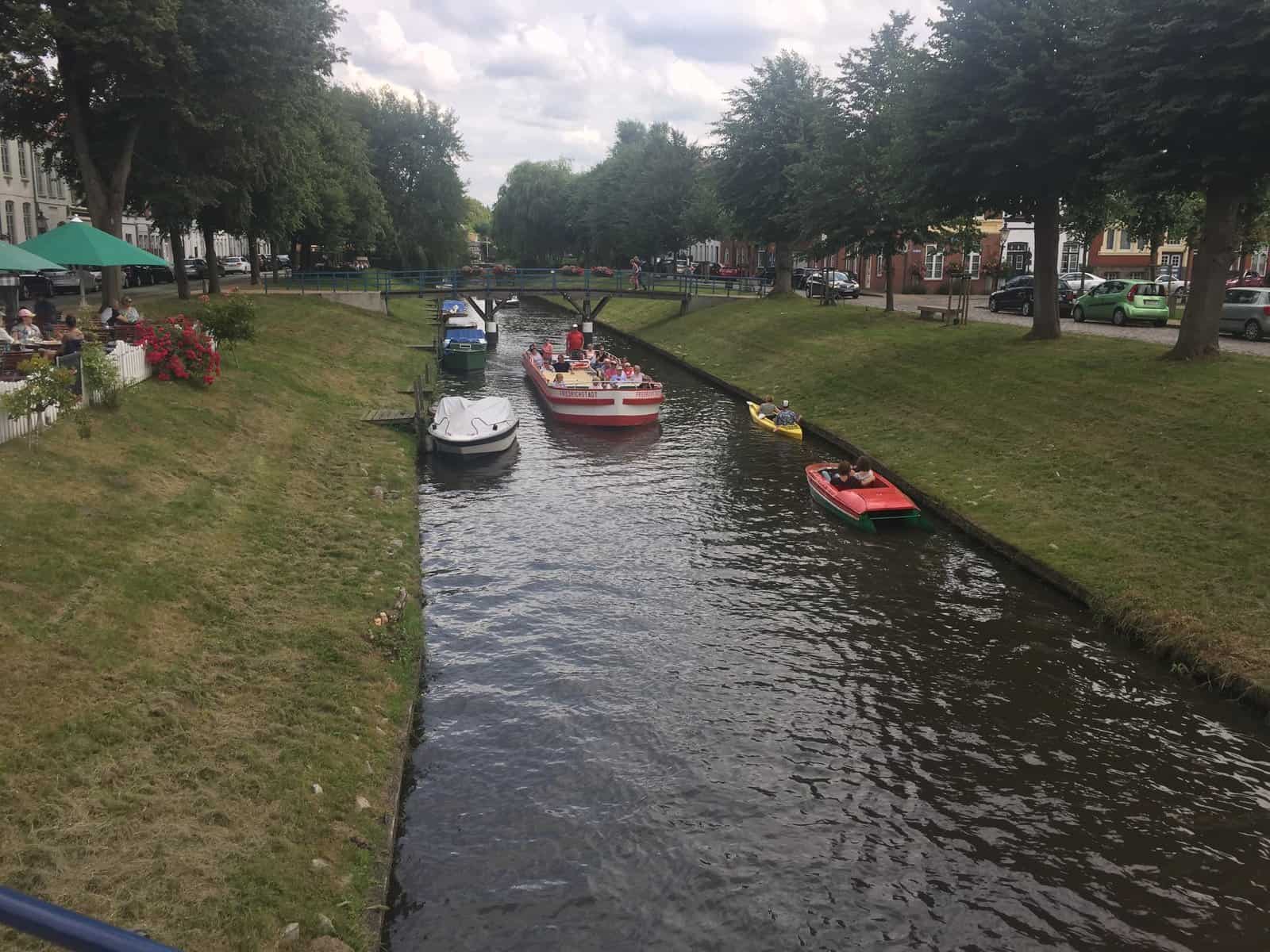
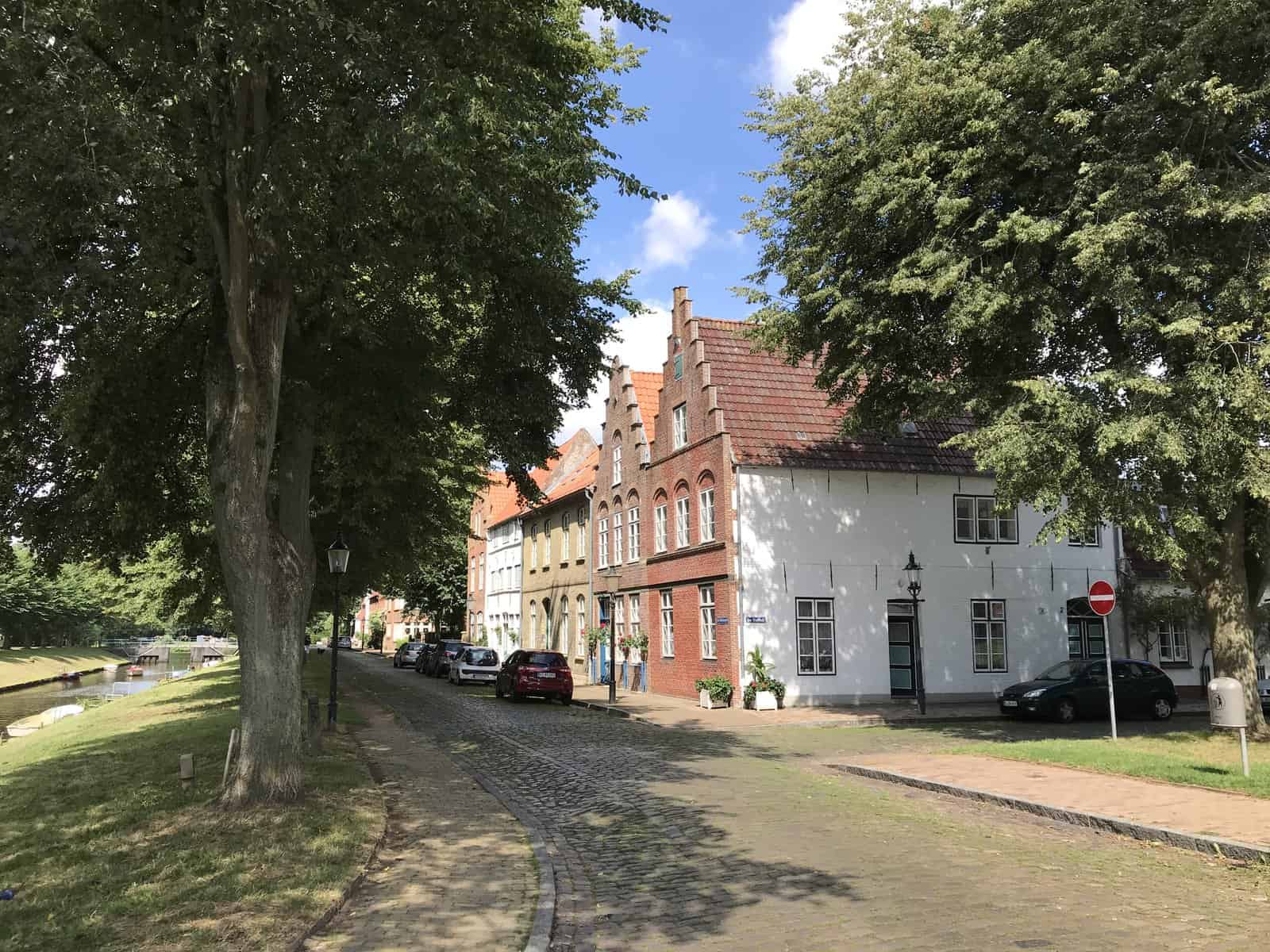
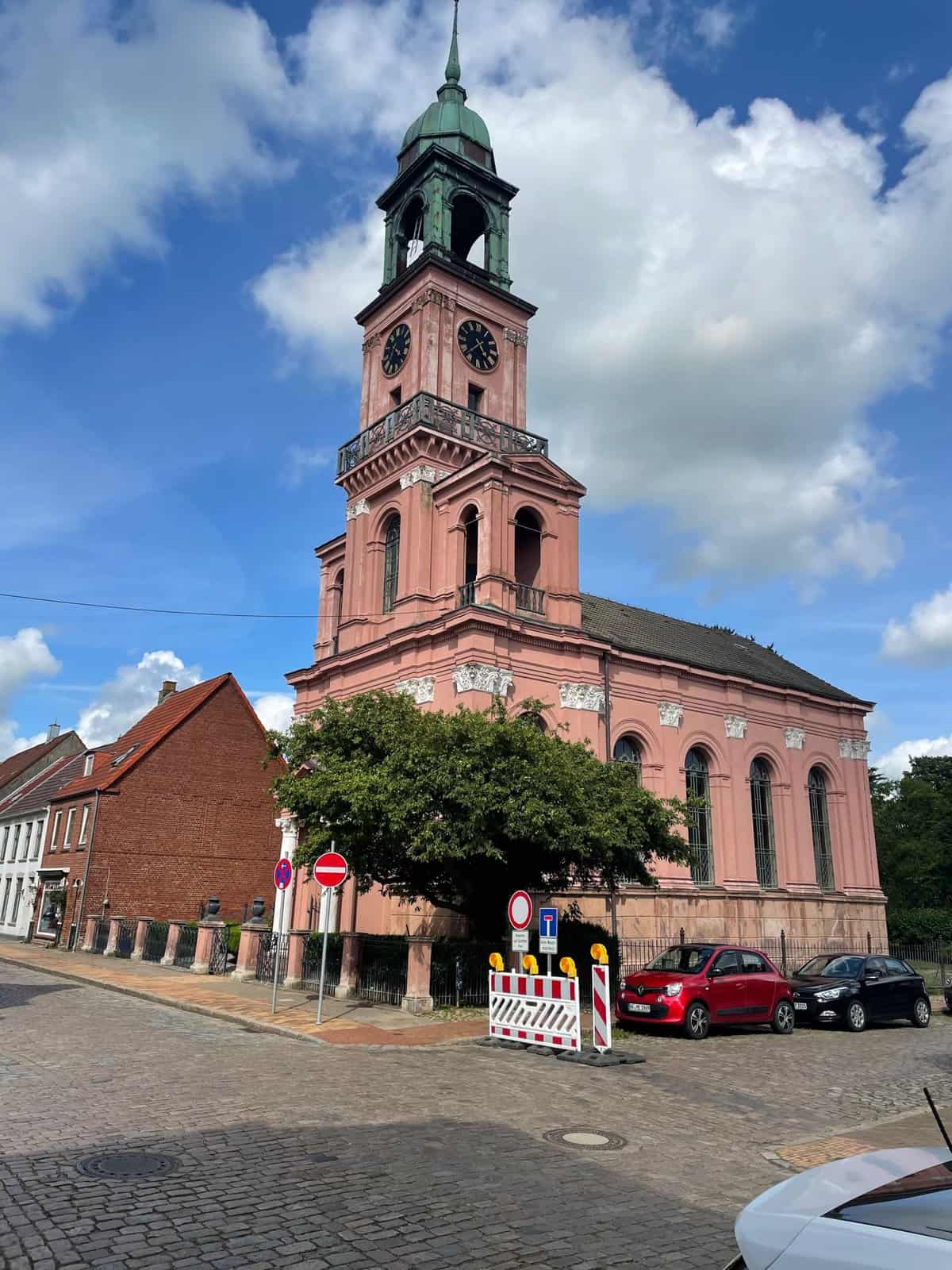
Part of the deal with the Dutch settlers was freedom of religion. This drew Remonstrantists, in particular, who were were being banished from The Netherlands.
Remonstrants are a liberal Christian community who ‘remonstrated’ against the Calvanist teaching of predestination.
To this day there is a Remonstrant community in Friedrichstadt who stress their tolerance and acceptance of other faiths. This brought in a sizable Jewish community who shared facilities with them until 1938.
From Friedrichstadt we needed to pass down a tidal part of the Eider, going through the Friedrichstadt lock, the Friedrichstadt rail bridge and the Tönning Road Bridge.
These obstacles are only in service at certain times and these are especially limited at weekends. Stupidly, these times take no account of the tide, so if the tide does not match the service hours, you are stumped.
The tide does not seem to behave as predicted by the many tide prediction websites. The actual tide can be out by several hours. We realised this is because the tide is largely determined by the Eider Sperrwerk, the vast tidal barrier across the entrance from the sea. When we were in Tönning back in 2019, the tide did not go out at all one afternoon, to facilitate the Tönning Yacht Club’s summer regatta!
We had been shown a notice that the Tönning Road Bridge would be out of service for two days, but this was after when we would pass. Tony slipped up badly with his passage planning. He had phoned ahead to check we would be able to pass Tönning Road Bridge. It later emerged he was phoning the wrong bridge! He had missed that the Tönning Road Bridge would be out of service for two more days, which coincided with our departure from Friedrichstadt. We could not go back to Friedrichstadt nor through to Tönning. Fortunately, the weather was being very kind and we anchored for two days and nights on the river while the bridge was exercised.
On the second of these days, we pleaded with the Bridge Master and he agreed to let us through on the Monday morning. It was then too late on the tide to get into Tönning, which is a drying harbour, so we anchored off Tönning and dinghied ashore to do the laundry at the campsite. Finally, in the afternoon, we were able to enter Tönning Harbour. We berthed right up at the top, made possible by our shallow draft.
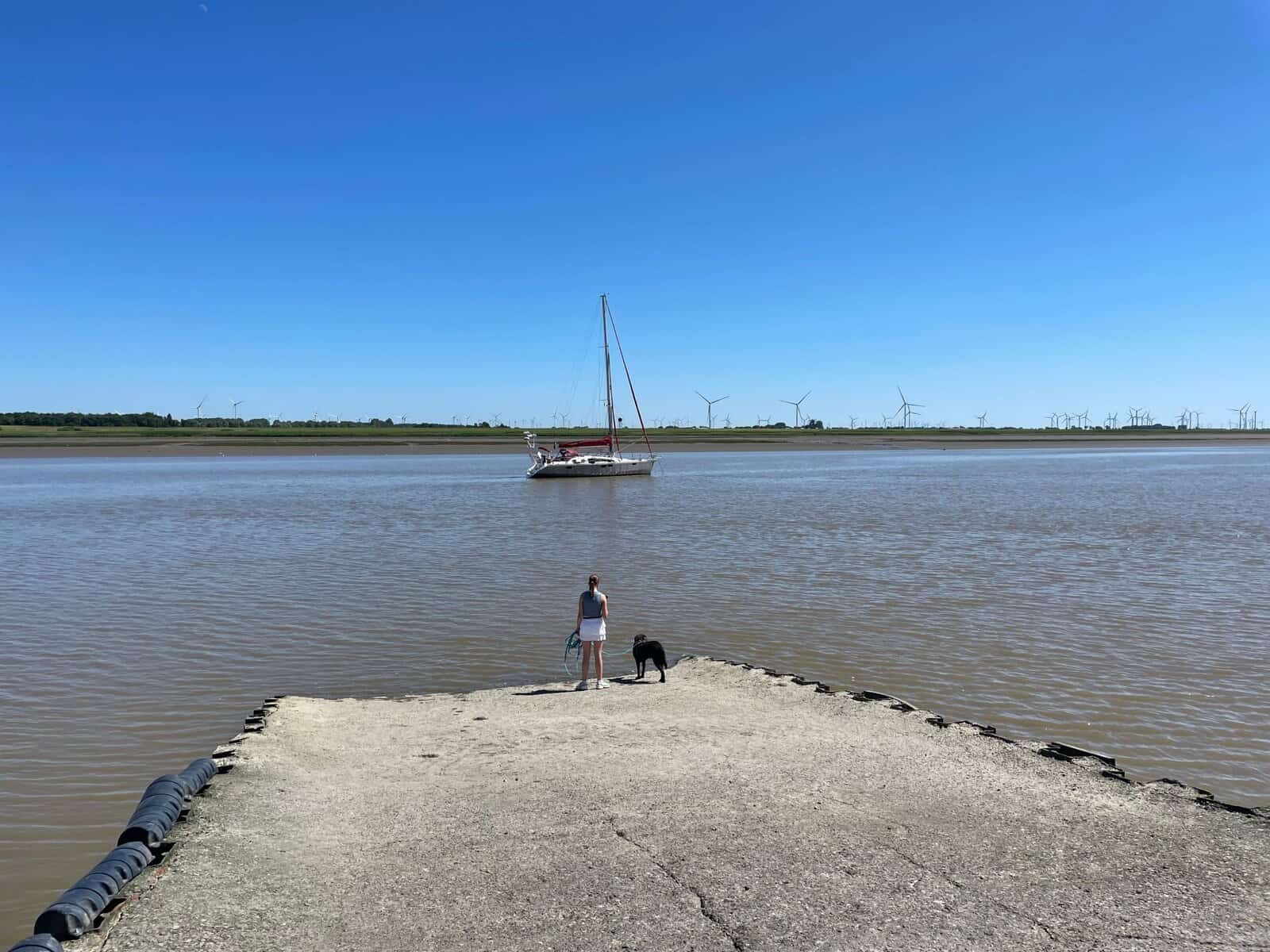
Tönning is also the work of the Dutch but is not quite so picture-perfect and does not draw coaches in the same number. The harbour is much more to our liking. We had a great couple of days, including visits to the Havenblick café for Kaffee und Kuchen.
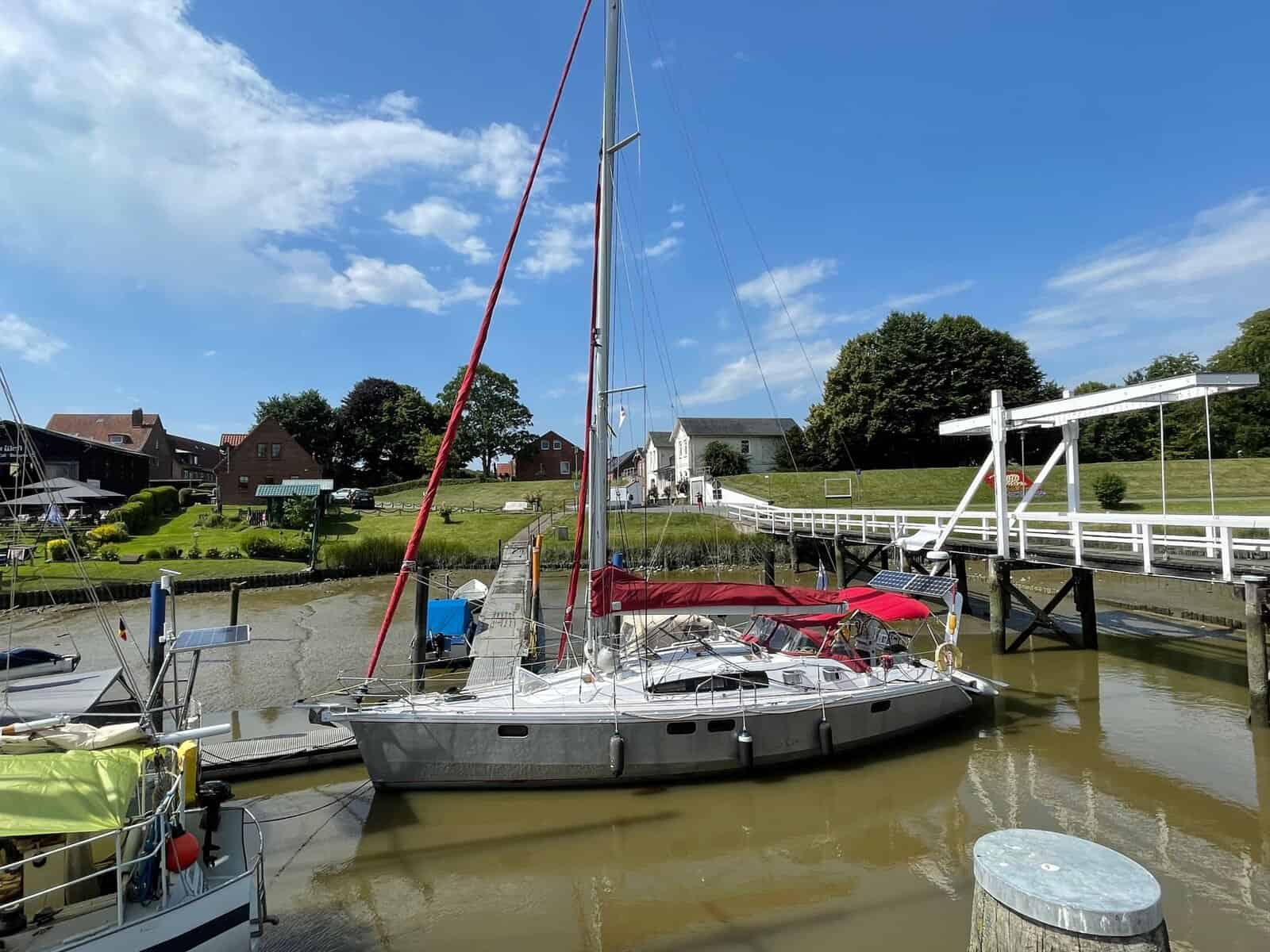
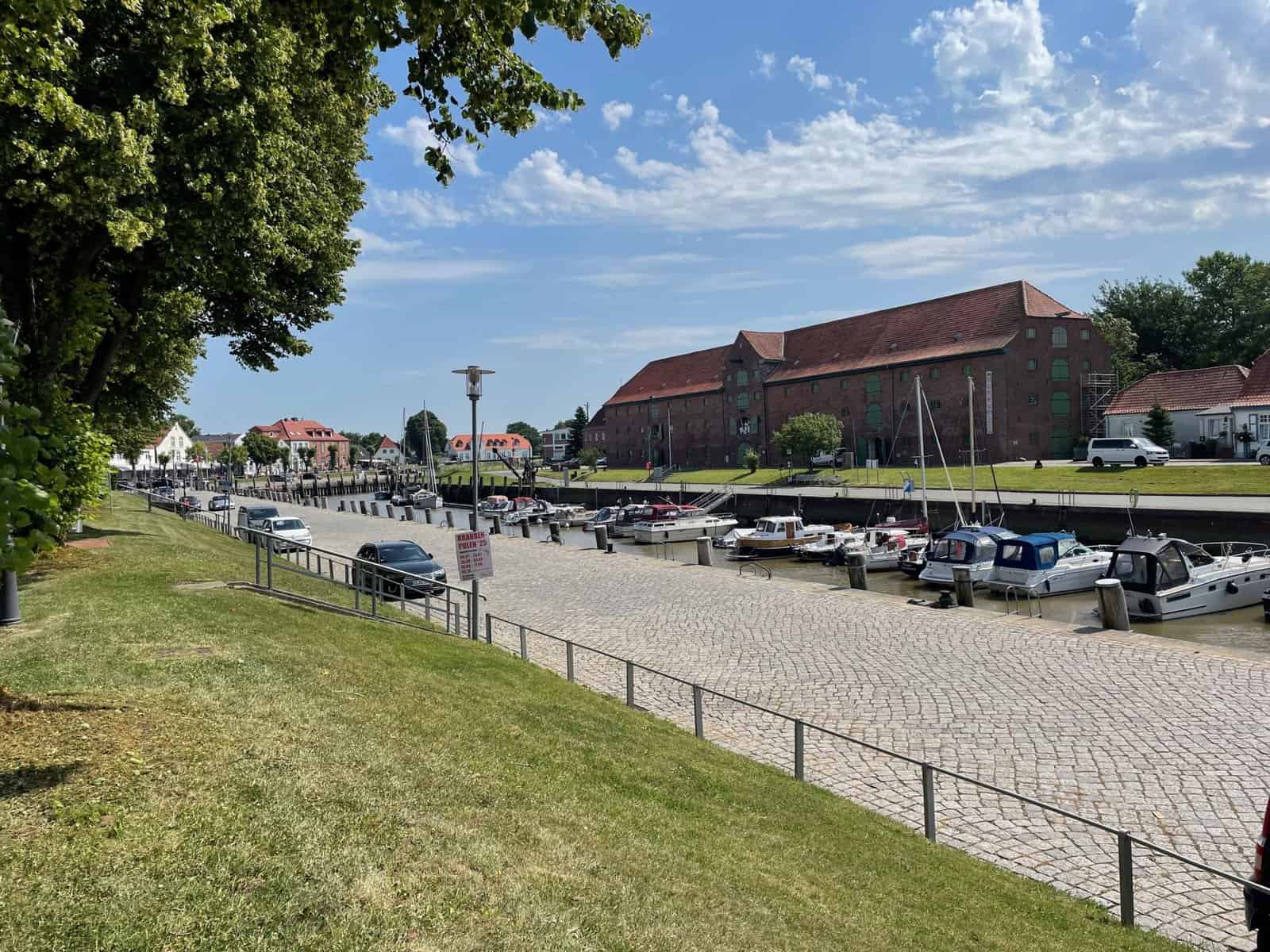
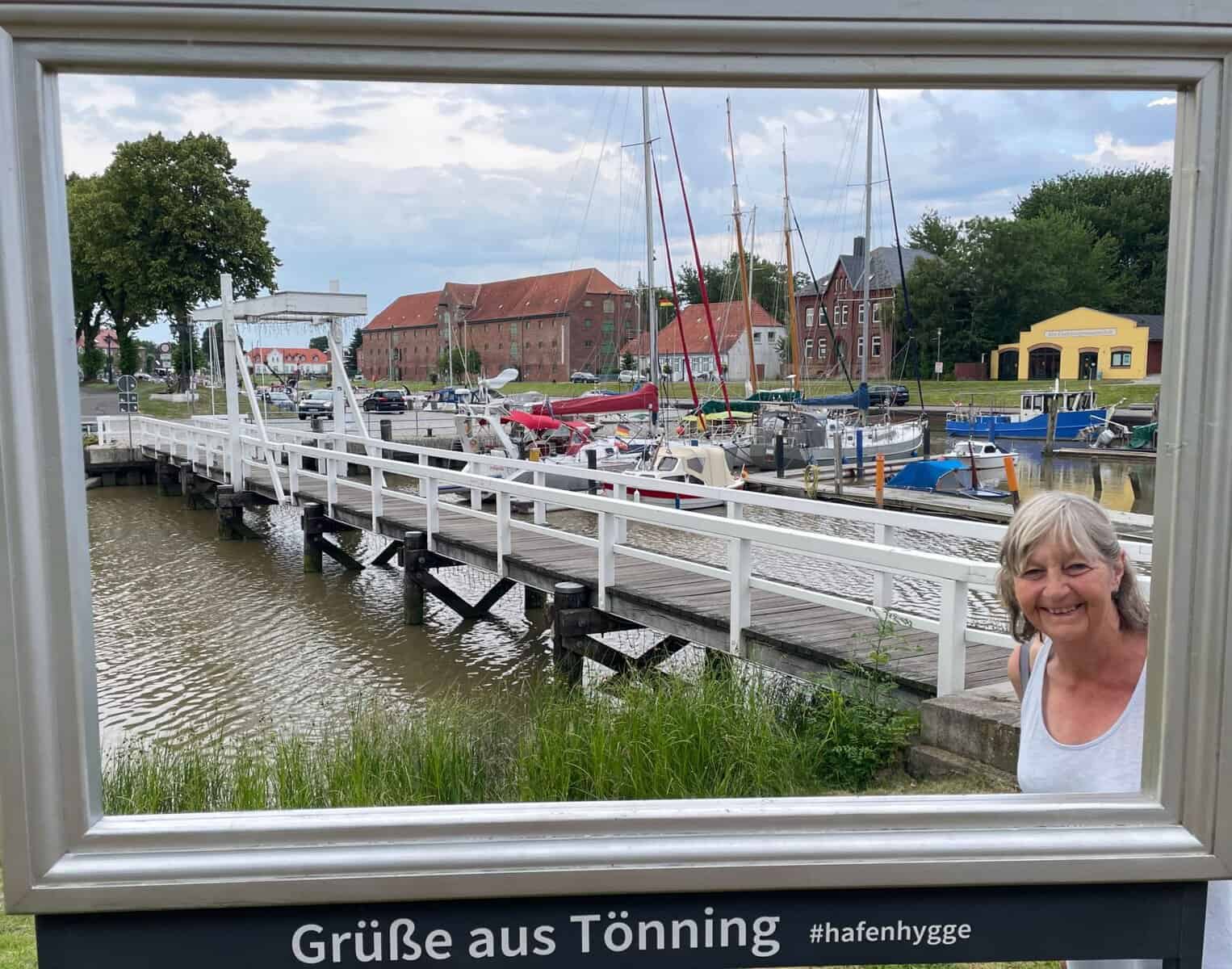
In earlier times Tönning, had a grand Schloss. Today, only the ducks benefit from its memory.
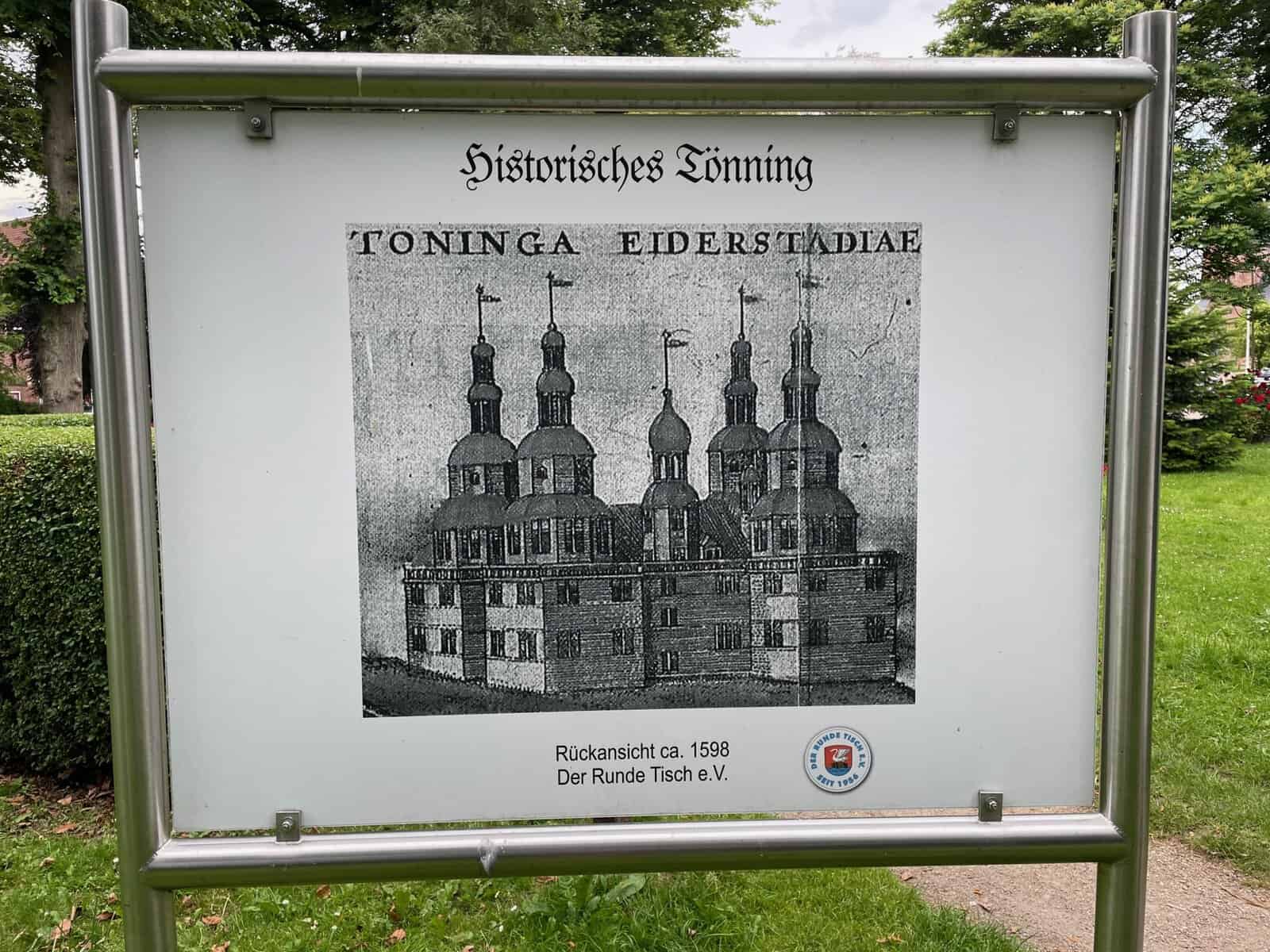
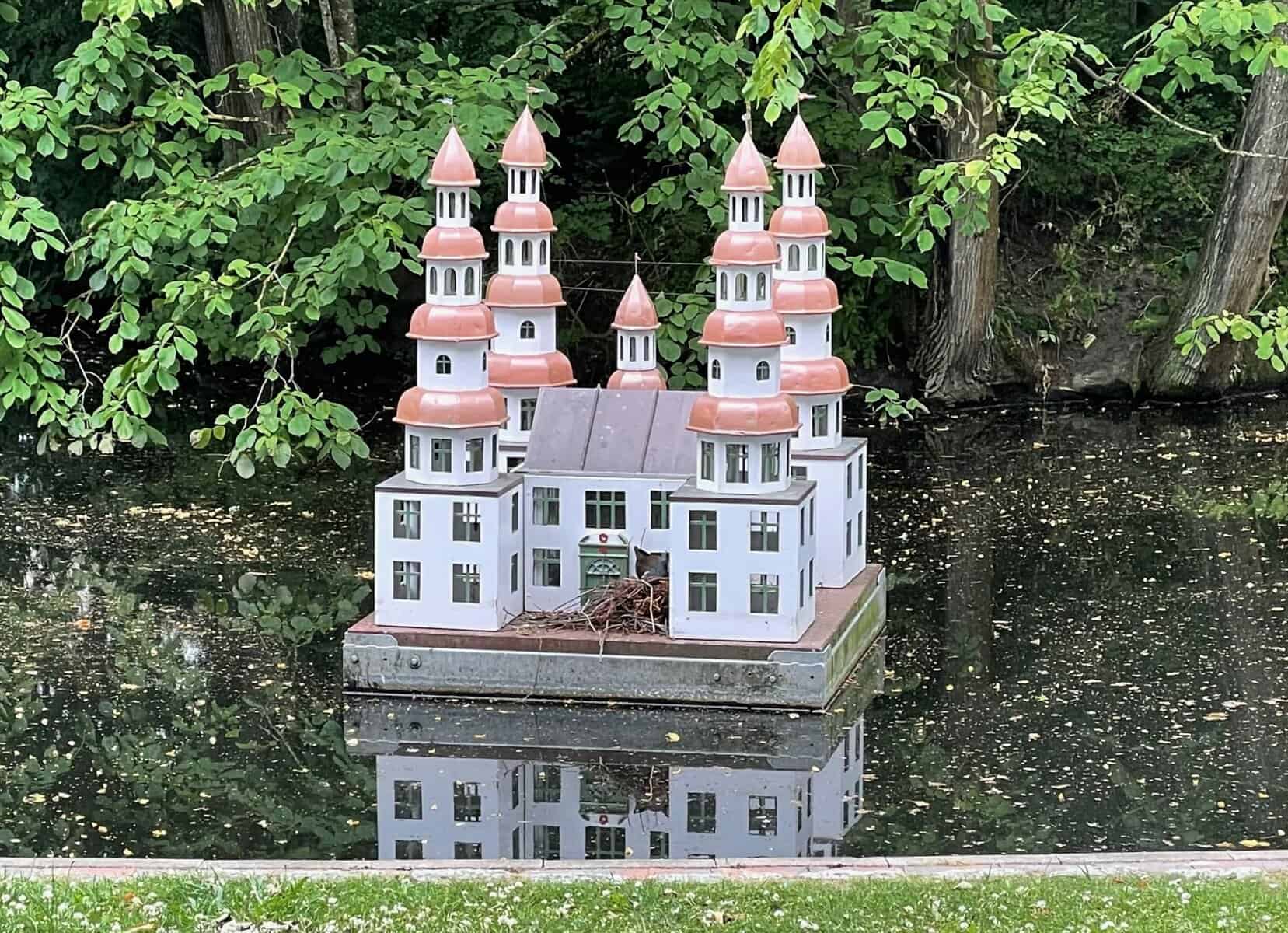
We were assured there will be sufficient water for us to depart on Thursday. Normally, one has to leave Tönning two hours before high water and face the flood in order to arrive at the Sperrwerk at high water. It looks like we will be spared that as there will be no flood.
From the River Eider, we sail for the German East Frisian Islands.
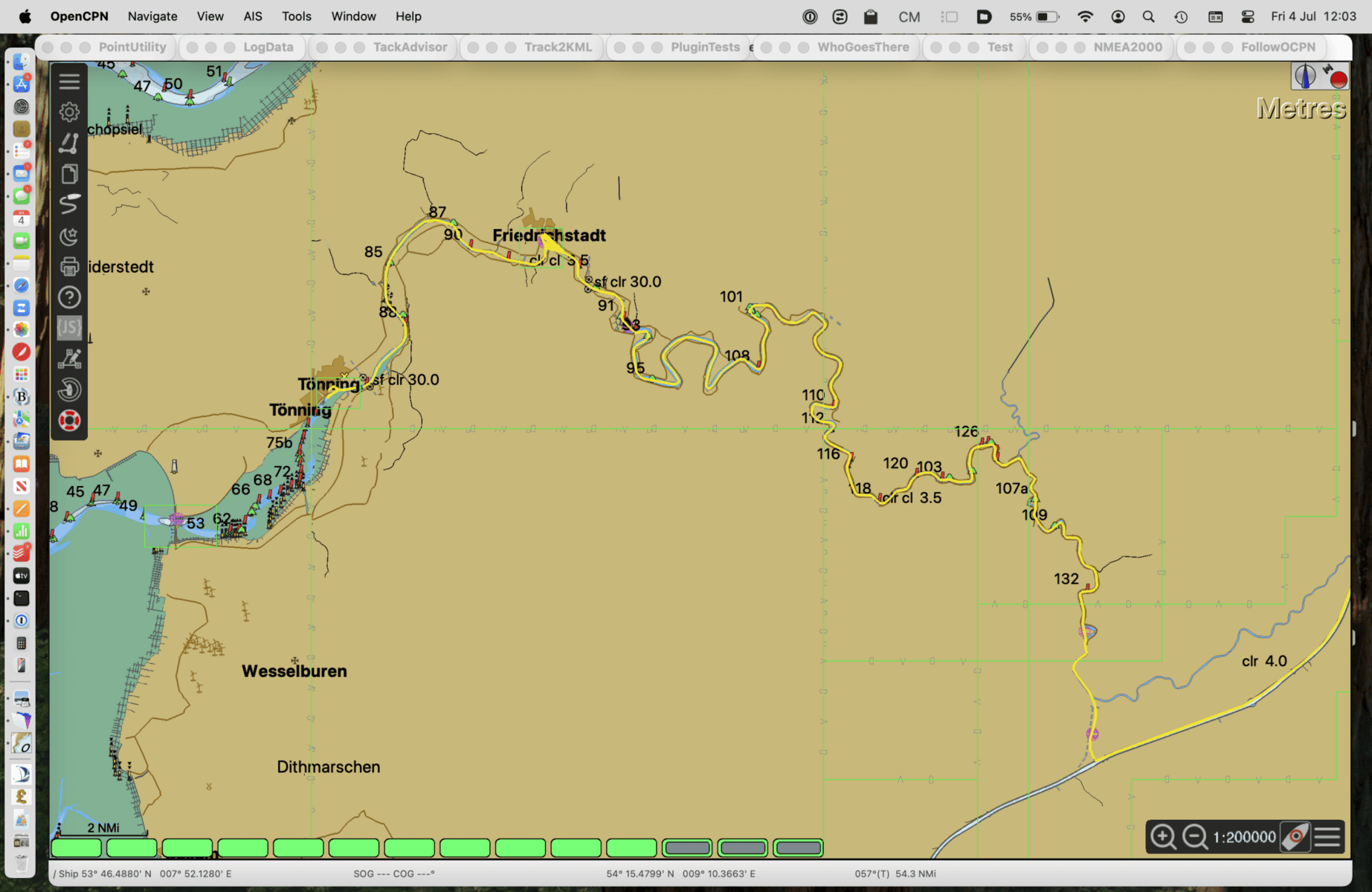
That’s our news from the River Eider. See the track below.
Tony & Ynskje xx
hi ine en tony,
Ine, dat wordt even vertalen: wat leuk dat jullie weer in Friedrichstadt waren. Doet echt aan Holland denken.
Jullie boffen wel met het weer he, of is het te warm.
De 15e vertrek ik met de flixbus voor 5 dagen naar Itzehoe; misschien dan ook met de fiets naar Friedrichstadt.
Tot die tijd genieten van mooie weer in het Hollandse.
Voor jullie: een veilige vaart naar Amsterdam en zie jullie daar. Liefs, Heleen